
I'm looking for your face | Photographs by Ferenc Olasz

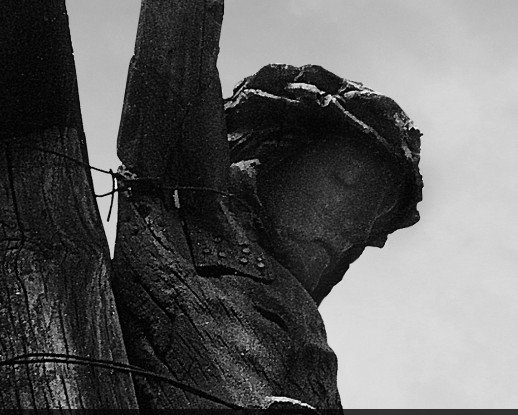
The sacred monuments standing along the roads are still able to fulfill their original purpose and spiritual function today – they make us stop, quiet down, and reflect. The crosses and statues that once dotted the Carpathian Basin, standing in grain fields, on the border, on vineyards, in church gardens, or in cemeteries, are now slowly disappearing, their condition steadily deteriorating.


Schedule
Since the 1970s, Ferenc Olasz has been photographing the material remains of our spiritual heritage that can still be found in Hungarian-inhabited settlements. After graduating from the Teacher Training College in Eger and then the Hungarian History Department of József Attila University in Szeged, he began taking photographs as a young teacher: his intellectual curiosity drew his attention to his immediate surroundings. His first subjects were his close friends, neighbors, and elderly residents of Alsópáhok, followed by their houses, yards, stone crosses on the edge of the village, and tin Christs and Marys. This is where his photographic journey, which he regarded as a mission, began. His work is not defined by a conscious documentary program; he approaches the image intuitively, seeking possibilities for the visual representation of moods and feelings. Over the course of his six-decade career, his photographs and films have become important records of the values that still existed in the final moments of a changing social and natural environment. Today, many religious customs have fallen into oblivion and lost their original community-building or faith-strengthening function. However, the survival of traditions is often linked to a small sacred monument, which not infrequently serves as the only remaining cultural heritage of a settlement and can even become a bearer of community memory and identity.
The title of the exhibition, I Seek Your Face, is a quote from the best-known work of the Italian-born Benedictine abbot, St. Anselm of Canterbury (1033–1109), Proslogion, which is as much a prayer as it is a declaration of his desire to know the face of God. Ferenc Olasz’s choice of title is a philosophical self-definition of his search for God, and in fact a natural description of his activity. All his photographs are portraits insofar as they preserve something that makes the absent present.
"I have preserved treasures that are evidence of the thousand-year-old culture of Hungary and that will forever remind us of the praise of God by (mostly) unknown masters. These artistic relics are part of universal culture and carry the message of the Hungarian people, a nation blessed with faith and talent. My pictures are meditations... They speak of faith, silence, and the silence of the soul."
Curator: Zsuzsanna Tulipán
Kunsthalle Budapest
The largest exhibition hall in Budapest, in Heroes Square, just the opposite the Museum of Fine Arts.