
Horváth Nóra / Oláh Balázs: Bál

The way they look and walk...
Some people can't stand them, others adore them. But whether it's a wedding, a spring ball, or a birthday party, it's almost impossible to avoid encountering them. They are an integral part of our culture, as they are consumed by the masses. What happens when we take this instinctive, communal experience out of its usual context?
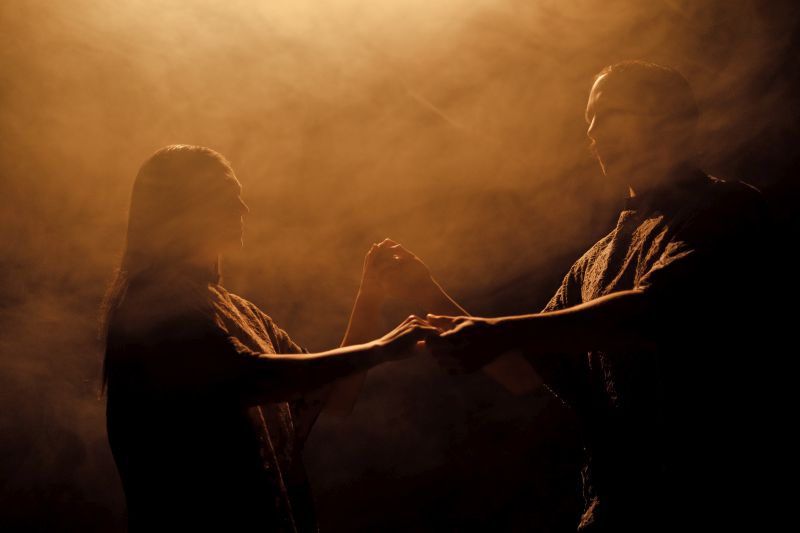
BÁL takes it under the microscope, breaks it down, twists it, kneads it again, and brings it to the stage, because it has just as much right to be there as any other dance, even if it consists of simple movements. We give mulatós the opportunity to break free and encounter another similar living culture, electronic music, whose character is defined by energetic pulsation and a distorted, layered soundscape.


Schedule
The performance highlights that our system of traditions is not merely an imprint of the past, but part of a living culture that continues to evolve to this day.
In an extremely divided society, this piece aims to serve as a common platform for the coexistence of the contradictions found in life, which are often so difficult to bridge.
We look forward to seeing you at the BÁL, where familiar songs and dancing await!
The "mulatós" is a lively genre of Hungarian folk music and dance, traditionally performed at weddings and festive gatherings. The BÁL reinterprets this style through the innovative lens of contemporary dance. In the choreography by Nóra Horváth and Balázs Oláh—which they perform themselves—traditional male and female roles are deliberately reversed, and the dance lasts only until they can no longer breathe, pushing their physical limits. The performance is accompanied live by experimental electronic musician András Molnár and folk singer-keyboardist Olivér Rácz, creating a dynamic dialogue between past and present. In a deeply divided society, this performance seeks a common platform for coexisting contradictions.
Nóra Horváth and Balázs Oláh began their first joint research project in January 2021. Their interest and work stem from researching and documenting the current dance culture of people living in Hungary, as well as their persistent efforts to find new channels of communication through which they can reach audiences from different social backgrounds. Their goal is to make contemporary dance, which is concentrated in Budapest, more accessible to communities that have less access to the arts. In their art, they bring contemporary social dances, such as urban and folk dance, to the stage with the dramaturgy characteristic of contemporary performances, creating a new formal language while ensuring that it is accessible to a wider audience and, through raw physicality, reflects honestly and radically on contemporary social issues and problems.