
Majd ha fagy! – neoreneszánsz rally

Place and time can be named: somewhere, sometime. Fifteenth-century Rome and Deák Square, 2025.


Schedule
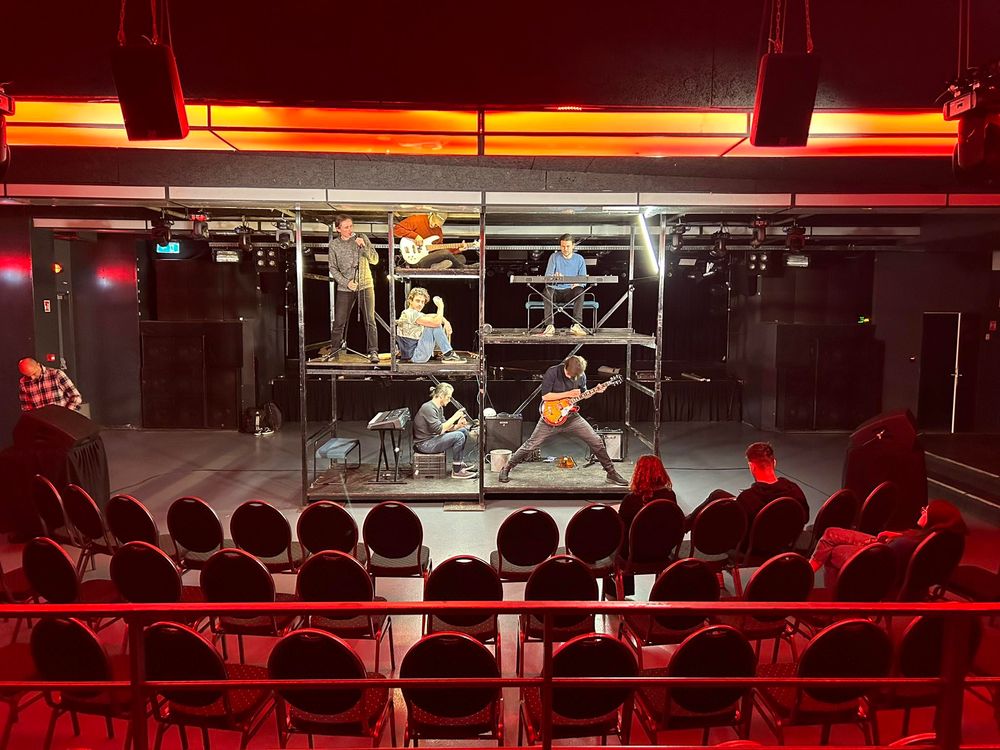
Thirteenth-century London and Astoria, tonight. A four-season tableau of the fortunes of three vagabonds. They strive to survive on the edge of society. To remain. They are targets, motionless. They have no desires, no thoughts that would spur them to move. But why? Is this a chosen exile or forced penance? Or did it just turn out this way? Can freedom be oppressive? Are prosperity and happiness synonymous? What do I have if I feel that I have nothing? Can I be happy even if I don't really belong anywhere? What are the values that I cannot lose even if I have nothing in material terms? So: what do we need to remain human?
The problem of homelessness has been an unsolved task, a throbbing wound, for thousands of years. Instead of pretending to know the problem inside and out, passing judgment, or jumping to conclusions, we decided to call on two worlds that at first glance seem very distant from each other to help us explore the topic: the early and late Renaissance songbooks in English, Italian, German, French, and Spanish, as well as poems and novella excerpts written by contemporary Hungarian homeless poets selected from the Fedél nélkül (Without a Roof) archive.
Akvárium
As they describe themselves, it is Budapest's most frequented venue, which is also multifunctional. Akvárium is great for award ceremonies, afternoon coffees and, most importantly, concerts, thanks to the well-picked, cross-genre selection.