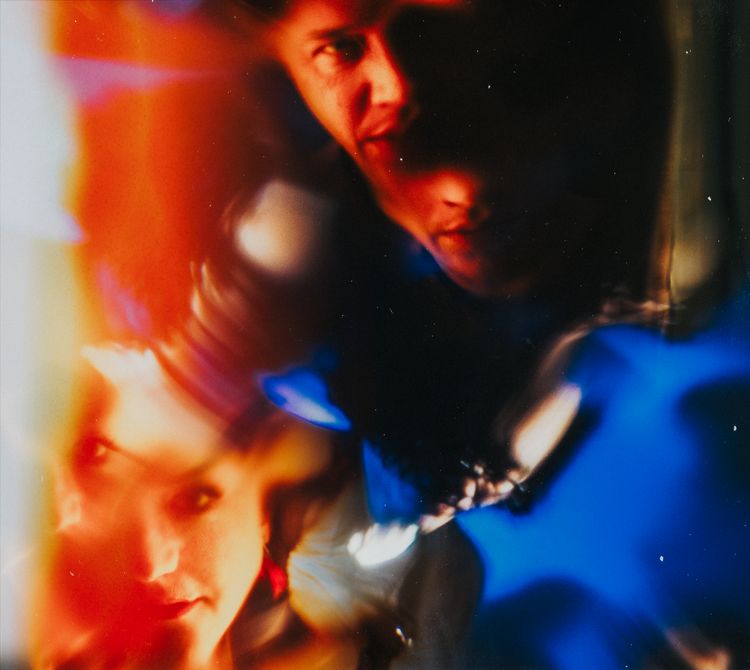
Hisztéria üzenőfüzete

Regős J. – Cs. Nagy – Regős S.:
Hisztéria üzenőfüzete
20th-Century Agitation
One reason hysteria is effective is surely that the viewer feels outright disgust toward it, is humiliated by it, because they are forced to be directly present at the birth of this embarrassing artwork. The most important demands placed on hysteria: untimeliness, purposelessness, and high volume. The nature of hysteria requires of the nervous breakdown—as hysteria’s material foundation—speed, concision, and irreversibility. The characters should be depraved, greedy, determined, and, if need be, alarming.
János Regős, 1993
Schedule
Report:
Budapest, December 12, 1959.
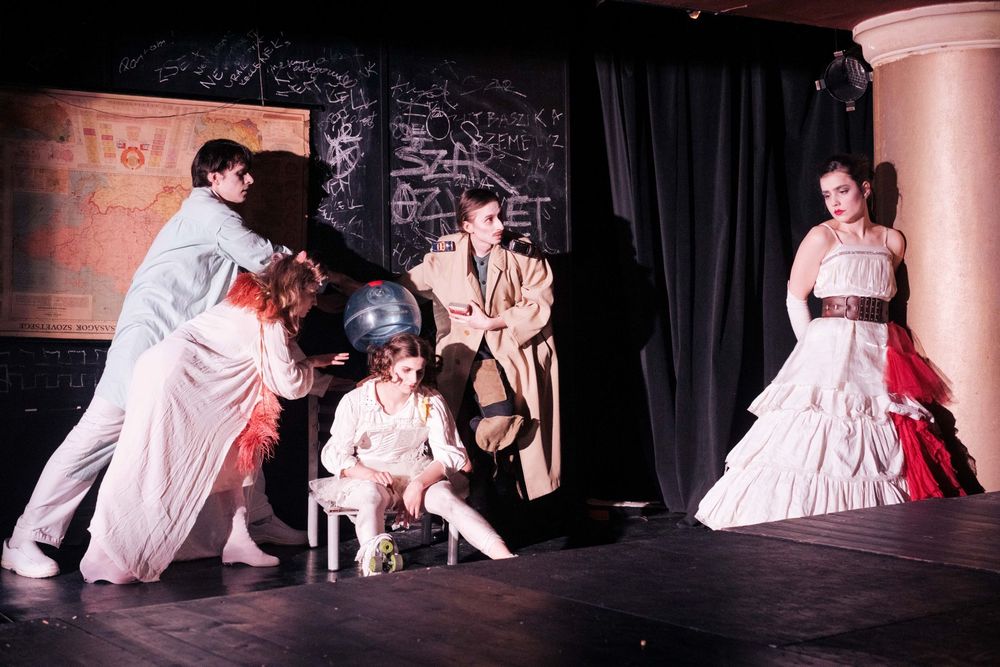
Ernő Pinczés (born Keller) is of bourgeois origin. Non-party member. Between 1944 and 1945 he was in forced labor service. He has a firm manner; he performs his work well. At present he is a window cleaner; until 1956 he was an ice dancer in the Budapest Ice Revue, from which he was dismissed for counterrevolutionary activities. Single; his former wife is Aranka Hermina Soós (born Saltz). They have two children who live with their father. Until 1945 the woman, together with her family, was forced to go into hiding because of the Jewish laws, in their apartment on Pasaréti Road. After our liberation she became a dancer, taught folk dance in factories, then became a nurse at the pulmonary clinic of János Hospital. Manic-depressive, unstable. They lived in a two-room apartment at 53 Kisáron Street, District XII, in a shared tenancy with me and my wife.
— Skovi
Content warnings: Strobe/flashing lights, sharp sound effects, smoke, verbal, physical and sexual violence, suicide.
Our performance is recommended for audiences over 18.
Cast:
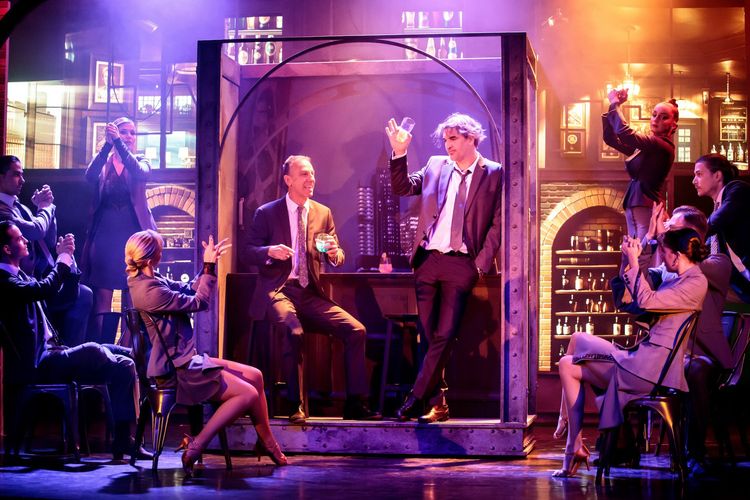
Kodolányi Kamilla: Bakfis, Saltz Aranka
Turi Péter: Cserkész, Keller Ernő / Saltz Gyula
Fehér Diána Aida: Bálkirálynő, Soós Aranka
Veress Kamen: Amorózó, Pinczés Ernő
Gellért Dorottya: Feleség, Pinczésné Soós Aranka
Babinchak Atanáz: Remete, Pinczés Ernő
Ionescu Raul: Hős, Pinczés Ernő
Németh B. Kristóf: Ablakmosó, Pinczés Ernő
Bukovszky Orsolya: Ápoló, Soós Aranka / Saltz Gyuláné Piroska
Gálhidy Gizella: Skoviné Terike, noble lady
Juhász Tibor: Skovi
Halott Zsidó Orchestra:
Bujdosó Áron: Trumpet
Gerner Koppány: Bass guitar
Gulyás Bence: Drumpad
Gyulai Sámuel: Piano
Molnár Barnabás: Guitar
Zsolnai Domos: Saxophone
Orchestra assistant: Szinok Rei
Costume, visuals: Németh Anna Rebeka, Bánhidi-Rózsa Bence
Construction/realization: Czeglédi Mátyás
Light/photo: Hivessy Menyhért
Poster/Design: Hegyessy Bercel
Financial assistant: Veszelák Borbála
Production assistant: Ladányi Anna Lana
Dramaturg, writer, production manager, intimacy coordinator: Cs. Nagy Audrey
Writer, director: Regős Simon
Special thanks: Réder Ferenc, Bethlen Téri Színház, National Cultural Fund, Maszek Kulturkör Association, German Gergő, Mészáros Fanni, Tóth Ágnes Judit, Kodolányi Marcell, Czeglédi Lajos
Bethlen Square Theater (Bethlen Téri Színház)
Bethlen Square Theater (Bethlen Téri Színház)
Innovative, Contemporary, Collaborative
Its mission is to be an interdisciplinary, experimental, and talent development center for contemporary performing artists, where creators from the region can realize their artistic visions under professional conditions and develop within a supportive environment.
Its goal is to provide a creative workshop and a common platform for the geographically and professionally diverse artistic community of the region.
Website: https://www.bethlenszinhaz.hu/
Facebook: https://www.facebook.com/bethlenszinhaz
Instagram: https://www.instagram.com/bethlen_szinhaz/
Bethlen Téri Színház on the map: https://maps.app.goo.gl/JtbTNJC5uLfEXmHE6