TAVATE: levitation (Ágnes Eperjesi – Tibor Várnagy)

Ágnes Eperjesi and Tibor Várnagy worked together as creative collaborators from 1991 to 1994. Their joint creative identity was indicated by the initials TAVATE, after they had taken each other's first names (Tibor-Agnes Várnagy and Ágnes-Tibor Eperjesi).
Schedule
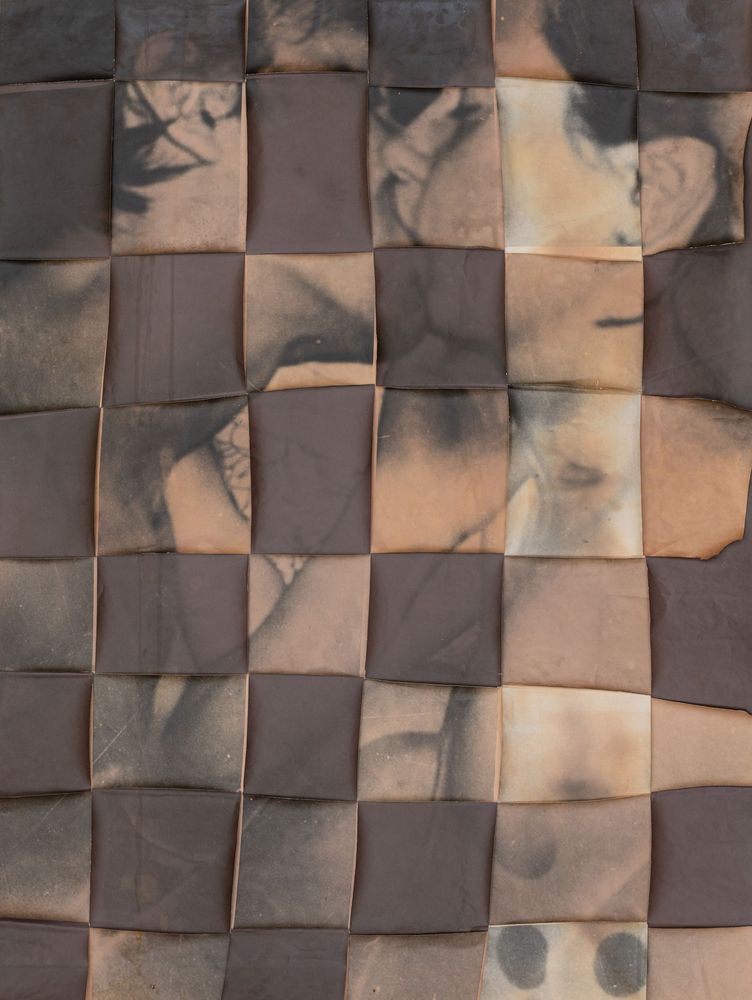
During the political, cultural and social transformations that followed the regime change, the artists experimented with the media specificities of analogue photographic techniques and created joint works, artist's books (Foreshadowing 1991, A Book 1992) and exhibitions (Tavate's Woven Images 1992, The Core Exhibition 1993). The name TAVATE expresses the symbiotic state in which the "self" is dissolved in the emotional and intellectual connection, the creative identities are also connected in one entity. This union is symbolised by the interwoven surfaces of the photographic strips.
For the exhibition TAVATE: floating, a selection of previously unseen or rarely seen pieces from three of the duo's series (TAVATE bath pictures; TAVATE bath pictures; TAVATE woven pictures). The duo first exhibited their work together at the Liget Gallery in 1991 during a collective strike by independent galleries. They installed their collective works in a safe space behind barricaded windows. The private exhibition was then only open to visitors invited one by one from their circle of friends. The documents of this intimate yet performative mode of exhibition can be seen in the acb Gallery exhibition.
Eperjesi and Várnagy were working with the medium of photography in the period before digital imaging, at a time when the raw materials for experimental photography were readily available. This circumstance also facilitated the experiments of a performative creative attitude that was characteristic of the period, pushing the boundaries of photography. The works in the exhibition are enlarged photographs of a solarised black and white negative, which preserve different surface textures and colours thanks to the manipulation of the negative, the physical effects of the enlargement (e.g. brushstrokes) and photochemical colouring. The duo often left open or delayed the traditional technical stages of enlarging the photograph, such as the time of fixing the photographic paper, to create different colour tones (brown, purple, yellow) from the black and white raw material. In the case of the TAVATE series of bathing pictures, these interventions have created painterly marks on the photographic paper. The artists deliberately used the device of error and surprise, such as the solarisation of the negative (in this case, the deliberate multiple illumination during development, which produces both positive and negative image qualities in the photographs), or the deliberate non-shaking of the calling liquid, which can produce a mottled, bubbly surface by applying different movements. In addition to the traces of technical experiments, the performative gesture and abstraction of the most intimate union in the form of images, the circumstances of the works' creation, can be seen in the pictures.After 1994, digital technology arrived in Hungary and at the same time the raw materials of analogue photography became increasingly difficult to obtain. Thanks to the change in media possibilities, TAVATE's works today, 33 years after their creation, have become a memento of a closed photographic era. The exhibited works are time capsules of love, whose creation was a time when (creative) freedom in personal life came together with the limitlessness of possibilities after the change of regime. This fleeting, intangible experience of existence is captured on photographic paper.
acb Gallery
Founded in Budapest in 2003, acb Gallery has consistently grown in the past two decades establishing itself as one of the leading actors in the Hungarian and Eastern European art market. Initially, the gallery’s focus was on Hungarian and international emerging and mid-generation neo-conceptual artists, who became active after the political changes in the former Eastern Bloc in 1990. Since then, the gallery has expanded its focus, and now represents numerous Hungarian neo-avant-garde artists who have left their mark on art history since the 1960s and 1970s, as well as members of the youngest generations beside the already established ones.
Since the autumn of 2022, acb runs three exhibition spaces: the main gallery space, acb Attachment, which serves as a project space, and acb Plus, dedicated to large-scale solo and group presentations.
acb’s research and publishing department, acb ResearchLab was founded in 2015. This platform within the gallery aims to fill the gaps in the reception and publication of Hungarian neo-avant-garde and post-avant-garde oeuvres by studying bodies of works and art phenomena previously treated as peripheral.
The gallery holds significant importance within the global art market, actively promoting its artists nationally as well as internationally and engaging in art fairs, such as the Art Basel in Basel and Art Basel Miami Beach, the Frieze Masters London or the ARCO Madrid.