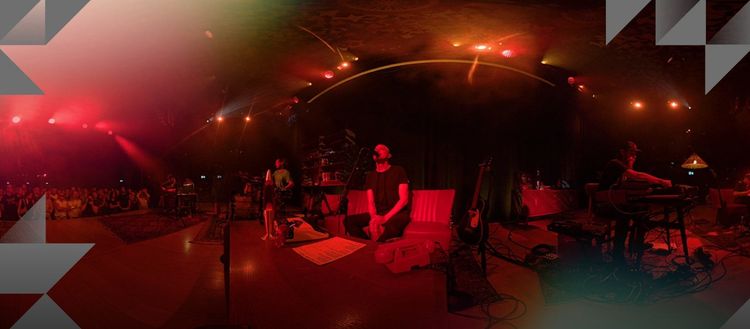
Csáth and his demons

diaries, letters, wallets, poems, excerpts from plays and novels, and Csáth's music, some of it

Schedule
- 17:30-20:00Csáth and his demons
- 18:30-21:00Csáth and his demons
- 15:00-16:30Csáth and his demons
Csáth and his demons
The performance is recommended for audience over 16 years!
Géza Csáth, born József Brenner, was already a musician, painter and writer as a teenager. At the age of 14, he published his first music review and sent a short story to Sándor Bródy, the editor-in-chief of the journal Jövendő. He was brought up in Szabadka, which was developing at the turn of the 20th century, but he longed for Pest. Heeding his father's admonition, he trained as a doctor to make a secure living. While at university, he wrote steadfastly, published in the Budapest Journal, and was a member of the West from its founding. He was one of the first to immerse himself in Freud's teachings, and used psychoanalysis wisely in his medical career. Throughout his life, he was expressly terrified of terminal illnesses, which he encountered at an early age: he was five when his mother died and sixteen when his little sister died. When he was wrongly diagnosed with lung disease, he took his first dose of morphine - and began a voluntary battle with demons, which he ultimately lost: in a morphine frenzy, he shot his wife at a young age and ended his life. Csáth's life's work sometimes disappears, sometimes returns to the literary consciousness. The performance will use original letters, diary entries and Csáth's literary works and music to evoke the genius of the great polymath, who is still at work today.
The performance is expected to end at 21.30, starting at 19.30)
Stream premiere: 13 February 2021, Comedy Theatre, House Stage
27 September 2021, Comic Theatre, House Stage
Vígszínház
The Vígszínház is one of the most historic and popular theatres in Budapest. Its three venues (the Main Stage, the House Stage Studio and Chamber, the Pest Theatre) have a total of more than 1700 seats. The theatre is also known as the cradle of modern Hungarian bourgeois drama, with famous authors such as Jenő Heltai, Sándor Bródy, Dezső Szomory, Menyhért Lengyel, Ernő Szép, Sándor Hunyady, Ferenc Herczeg, and others. In the 21st century, the majority of the world's theatres with large auditoriums have lost a good part of their audience. Despite this trend, the premieres of the Vígszínház are successful, and its performances are well attended. The theatre is located on the Újlipótváros side of Szent István körút in Budapest.