Utak és útkereszteződések | III. Fotóművészeti Nemzeti Szalon 2026

The National Photography Salon, held every five years, is not intended to be a chronicle: it is, by its very nature, a personal selection of photographic works from recent years. In the past, the arts sought to document events by publishing yearbooks and almanacs; today, we tend to think, “Everything’s online anyway.” Yet the World Wide Web cannot replace the overview, the demonstration of connections, or the highlighting of values.
Many people traverse the paths of artistic self-expression, heading in different directions, at varying speeds and intensities, with different goals. Each of their paths has its own justification; in fact, all of them may be worthy of being shown. Of course, no single exhibition space in the world has that much room. So we had to decide which direction to take when we began organizing this year’s photo salon. The more than 150 selected photographers approach their stated or implicit goals—which is nothing other than building a coherent body of work in our ever-changing, evolving world—through various paths. These paths can be defined and renamed in many ways, just like real roads, but in our opinion, they largely cover the map of contemporary Hungarian photography.
The broad highway with a traditional, historical perspective is the path of documentary-style photographs created with a socially critical intent, along which images or photo essays—often reportage-like, sometimes imbued with social fervor—cut through.
In contrast to the documentary approach, another path is that of intimate, personal, diary-like photography, which draws its themes emphatically from everyday life.
Conceptual photography is a busy, well-traveled path, where the initial idea, the concept, is often more important than the subsequent aesthetic execution.
Many artists also follow the path of manipulated imagery. Any image that stands in opposition to a reality deemed unacceptable for whatever reason—one that finds the artistic impact of images created from the traditional arrangement of existing elements insufficient—eagerly pushes the boundaries between reality and fiction, often crossing them, thereby creating a new, quasi-reality tailored to their own persona.
In contrast to this, we present archivists who reject all forms of automated machine image-making—those who reach back to photography’s two-century-old past, reconstructing the techniques of the era and creating their images through a lengthy and complex handmade process.
Schedule
A salon exhibition in 2026 that aims to showcase trends in photography cannot afford to overlook images created with the help of artificial intelligence (AI) or entirely by AI. This is currently the most rapidly evolving trend in photography.
The arc clearly delineated by the works in the exhibition halls is underpinned by the selected exhibiting artists and is preserved in a massive undertaking now being published by MMA Publishing and the MMKI: an album containing six hundred images and three hundred short essays by three hundred photographers, Three Hundred Creators of Hungarian Photographic Art, from whose contemporary artists we selected the salon’s exhibitors.
András Bán and Károly Kincses, curators of the exhibition
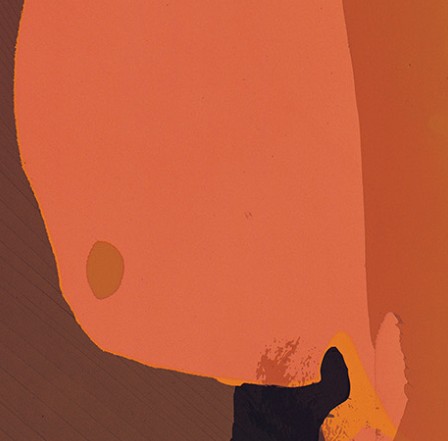
On the cover: Géza Hernád: Emulsion Drawing, 1/3, Mouse and Ghost
Kunsthalle Budapest
The largest exhibition hall in Budapest, in Heroes Square, just the opposite the Museum of Fine Arts.