RHYTHM OF MASS

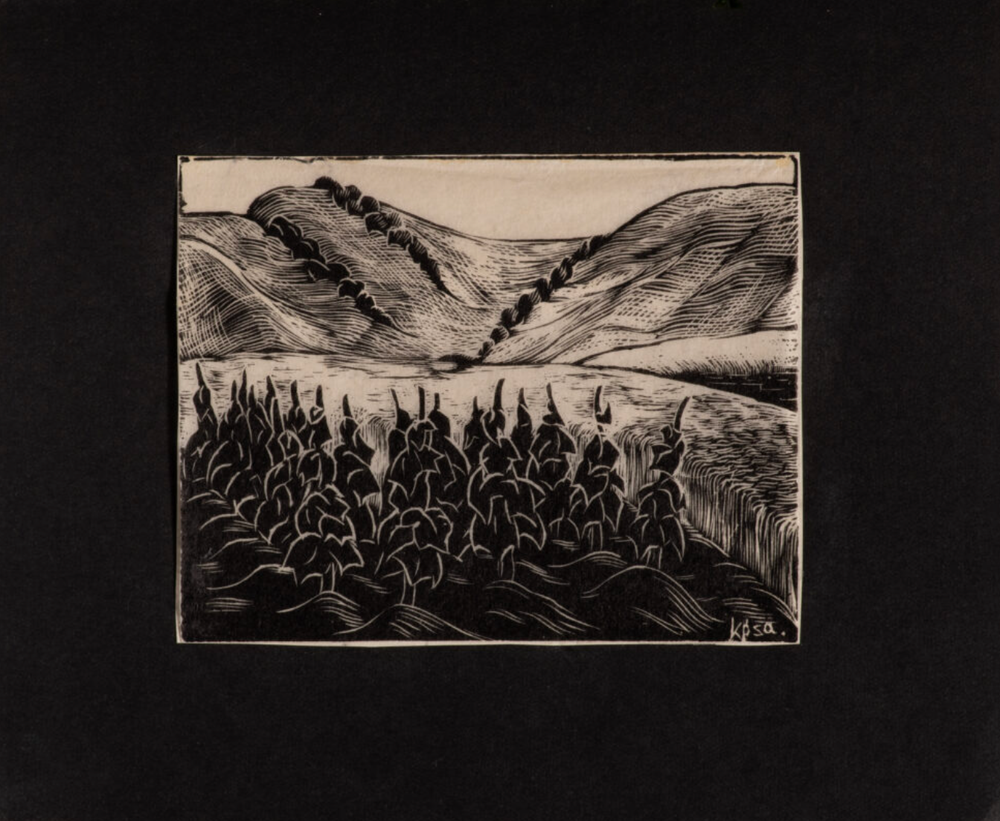
The Rhythm of the Masses – Rediscovering a Forgotten Body of Work: The work of Mária Kósa (Molnár), a uniquely distinctive artist of the interwar period in Hungary, raises questions about community, spirituality, and the nature of human relationships that remain surprisingly relevant even a century later. The exhibition at the BTM Kiscelli Museum – Budapest City Gallery presents an oeuvre reconstructed from fragments and attempts to restore the artist’s place in the history of 20th-century Hungarian art.
Schedule
“The fundamental idea behind my art is to evoke emotion in the masses,” wrote Mária Kósa (Molnár), who focused in her works on the rhythm of forms, the power of the overall effect, and the emotional charge of her compositions. Her art is defined both by the emotional intensity of Expressionism and by Symbolism’s approach, which seeks deeper layers of meaning.
What makes this exhibition special is that newly discovered pieces from her previously scattered estate are now on view together for the first time. Alongside the weathered small plaster sculptures, woodcuts, and linocuts preserved in the collection of the Budapest Municipal Gallery, newly discovered prints and documents, as well as sculptures on loan from private collections, trace her brief yet multifaceted creative career.
Kiscelli Museum
The Kiscelli Museum and its 15 hectares of parkland are located in the 3rd district of Budapest, between Óbuda and Remetehegy. The 18th century Baroque church and Trinitarian monastery, built by the Zichy family, was used as a barracks by the army in the 19th century. In 1910 it became the property of furniture manufacturer Miksa Schmidt, who later had it converted into a castle, hence the name Schmidt Castle. It is now home to the Budapest History Museum's collection of Modern Urban History and the Budapest City Gallery, the fine arts collection.