That's what happened. Early memory of the Holocaust in the works of eyewitness artists

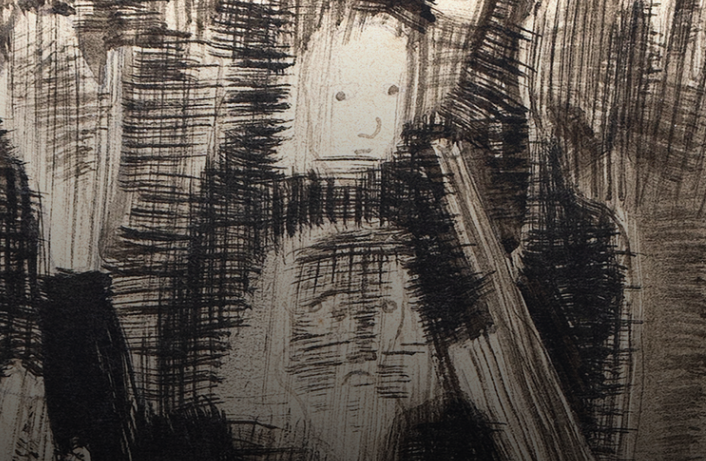
The exhibition, which presents the memory of the Holocaust in Hungary eighty years ago, presents unique and reproduced graphics and albums that capture the everyday life of the concentration camps, the ghetto or the labour camps in a narrative, figurative, often comic book-like form. The visual representation of the Holocaust, the point of view of the artists who witnessed it, the artistic documentation of what they saw, are key to understanding and interpreting the Holocaust - as time passes and the memory of the survivors fades, these works become extraordinary mementos.
Schedule
Most of the works were made immediately after liberation - with the intention of bearing witness, with different approaches, but all with an awareness of the responsibility of the witness. Thus, by (re)experiencing the events, by "re-enacting" them, we witness the personal and collective processing of trauma. These works have not been part of the canonicalised body of Hungarian art until now: they stand on the borderline between the artwork, the historical document and the personal trauma processing. The albums are personal, intimate, but also testimonies to the whole world.
Hungarian National Gallery
The Hungarian National Gallery is the largest public collection documenting and presenting fine art in Hungary. The permanent exhibitions of the museum, located in the Buda Castle Palace complex, showcase the most important works of Hungarian art, including masterpieces by Master MS, Pál Szinyei Merse, Mihály Munkácsy, József Rippl-Rónai and Dóra Maurer.