WANDA MARTIN & GÁBOR MARTIN: THE BALLAD OF ETERNAL YOUTH

The exhibition is open to the public:
29 May 2024 – 19 August 2024
Tuesday – Sunday from 12 to 7 pm
Closed on Mondays and public holidays
Curator: Péter Baki
Opening: 28 May 2024, Tuesday, 7 pm
Opening speach by Attila Till
Music by Soma Nóvé
Schedule
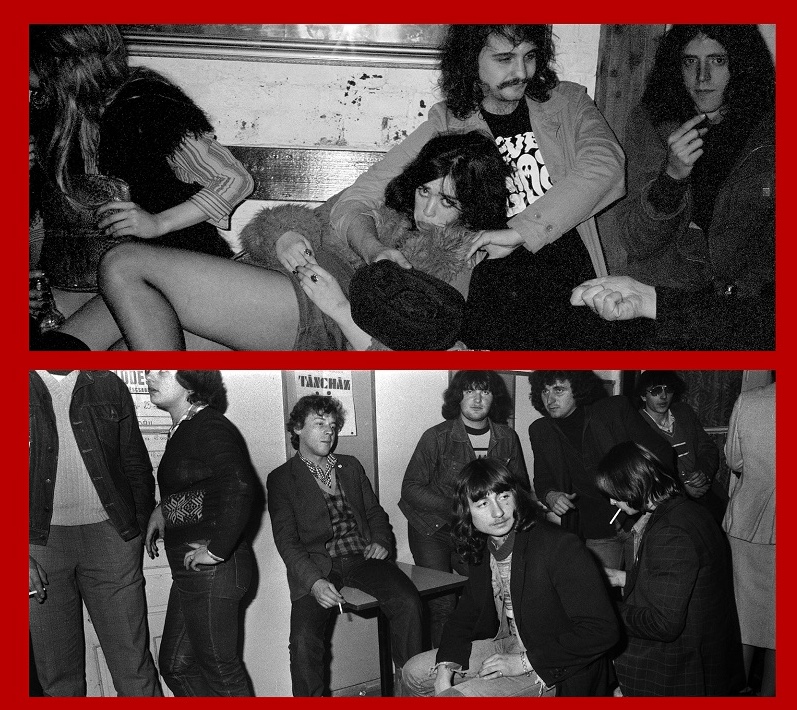
The respective documentary photos of Wanda Martin (b. 1991) and Gábor Martin (b. 1953) are separated by more than forty years and some two thousand kilometres. Yet the social phenomenon they sensitively portray is almost the same, if the subcultural milieu in question is fairly closely defined.
Gábor Martin photographed partying young people in the 1970s, particularly in Békéscsaba, while his daughter, also a photographer by vocation, does the same in today’s London. According to Wanda, ‘you can barely tell the pictures apart, which we think is the perfect illustration of how rebellion is encoded in the DNA of every culture, even if without reason.’ In their double series, images of a London subculture correspond to shots of nightlife and youth culture behind the Iron Curtain—and the series is timeless in the sense that rather than wishing to depict the period they lived in, the photographers sought to capture the ageless rebellion and group dynamics of young generations.
Hungarian House of Photography - Mai Manó House
Mai Manó House – The Hungarian House of Photographers – operates in a studio-house built at the end of 19th century, for the commission of Mai Manó (1855-1917), Imperial and Royal Court Photographer. This special, eight-story neo-renaissance monument is unique in world architecture: we have no knowledge of any other intact turn-of-the-century studiohouse. In addition, it serves its original goal, the case of photography again.
The aim of Mai Manó House is to advance the development of Hungarian photography and raise photography’s national prestige as a distinct form of art.
The institution plays a marked role in the cultural life of Budapest and Hungary, while the organization of exhibitions and programs abroad is getting more and more emphasis within its activities. The reputation of justly world-famous Hungarian photographers of the 20th century offers a great opportunity to regain our old status in the world of photography by the introduction of the generations following those great masters