Americana – Selection from György Pálfi’s Photography Collection

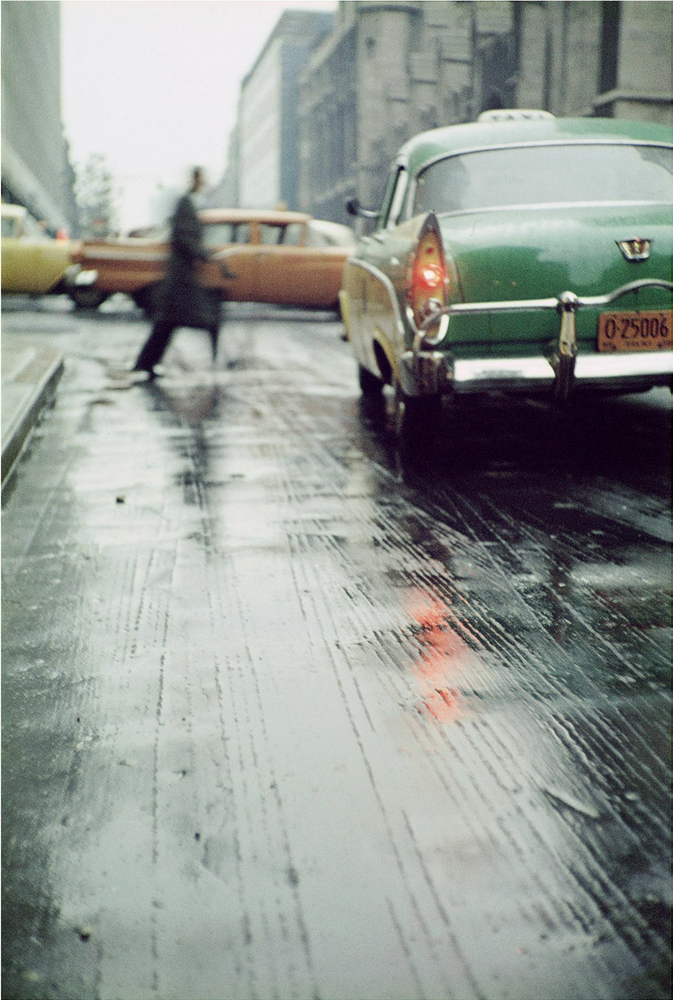
Since their nearly simultaneous inception in the late 19th century, America and the car have been inextricably linked. Born during an era of rapid innovation, the automobile revolutionized movement by delivering newfound freedom and speed, while photography emerged as a dynamic medium to capture progress and transformation. Drawing from the brilliant and discerning collection of György Pálfi, this remarkable selection of photographs illustrates how the car and photography have led parallel lives from the mid-20th century to the present, revealing the diverse cultural, artistic, social, engineering, and design facets that have come to define American life.
The exhibition is open to the public:
23 April 2025 – 22 June 2025
Tuesday – Sunday from 12 to 7 pm
Closed on Mondays and public holidays
Curator: Péter Baki
Opening: 22 April 2025, Tuesday, 6 pm
Opening speech by Gábor Ébli, philosopher of aesthetics
Schedule
Over the decades, the automobile has become a favored subject in photography, contributing richly to the visual lexicon of the 20th century and beyond. Cars have evolved into iconic symbols of the American landscape – epitomizing progress, speed, freedom, independence, and individualism. Cars came to symbolize success and modernity, while the American road trip emerged as a powerful metaphor for freedom and self-discovery. This symbolism is vividly captured in the evocative imagery of Kerouac’s On the Road, the striking works of Robert Frank, and the expansive vistas of Route 66 – the 20th century’s embodiment of Manifest Destiny. In this context, the car is not merely a mode of transport but a vital component of the American Dream and a marker of social status.
Influential artists such as Ed Ruscha, Robert Frank, and William Eggleston have harnessed the power of the lens to explore both the aesthetics and broader narratives of car culture. For example, Frank’s Covered Car, Long Beach, CA presents a shrouded vehicle as a metaphor for America’s hidden stories, while Eggleston’s work from the Los Alamos series elevates the mundane to the poetic – transforming an everyday car into a study of color, form, and cultural resonance. Similarly, O. Winston Link’s Hot Shot Eastbound at the Drive-In, Iaeger, West Virginia juxtaposes the romance of the railroad with the rise of car culture, and Dennis Hopper’s Double Standard reflects the rebellious spirit of the 1960s. Together, these works challenge conventional boundaries between art and documentation, capturing an evolving dialogue between Americans and their automobiles.
The intertwined evolution of the automobile and photography spans over 140 years – from the first automobile in 1885 and the invention of the Kodak camera in 1888 – marking an era of rapid technological advancement that revolutionized how people lived, worked, and traveled. As automobiles embedded themselves into the fabric of American society, they became enduring subjects for photographers, who documented everything from people behind the wheel and car advertisements to lively scenes at drive-ins and drag races. This documentation has helped form a distinct visual identity of modernity, reflecting a legacy of technological innovation that has deeply impacted society and culture worldwide.
No single sensibility dominates the history of car photography; instead, photographers have consistently explored the extended meanings of auto culture. While the automobile’s apparent function is transportation, it carries a symbolic weight that reaches into the psychological and emotional realms. It offers “transport” that is as much about the inner journey as it is about moving from one place to another. As a key ingredient in the rites and rituals of modern society, the car marks our social, sexual, political, and economic milestones, with the camera often accompanying these moments – recording, providing proof, and preserving memories for posterity. The resulting imagery captures a wide spectrum of attitudes, from adulation and appreciation to wit, irony, cynicism, and even hostility, thus chronicling humanity’s provocative and evolving relationship with the car and its culture.
Every photograph in this collection stands as a testament to the enduring interplay between two transformative innovations. Together, the automobile and camera have not only documented the American journey but also sculpted its cultural identity – leaving an indelible legacy that continues to shape how we see ourselves and our world.
Exhibited artists:
Al Satterwhite , Berenice Abbott, Brett Weston, Dennis Hopper, Ed Ruscha, Elliot Erwitt, Ernst Haas, Evelyn Hofer, Ezra Stoller, Gregory Crewdson, Grey Crawford, György Lőrinczy, Inge Morath, Jeff Brouws, Joe Maloney, Joel Meyerowitz, Joel Sternfeld, Joseph Szabo, Langdon Clay, Lee Friedlander, Matthew Porter, Mitch Epstein, O. Winston Link, Pete Turner, Peter Hujar, Ray K. Metzker, Richard Misrach, Robby Müller, Robert Frank, Robert Funk, Ruth Orkin, Saul Leiter, Stephen Shore, Gergely Szatmári, Thomas Ruff, Thomas Struth, Todd Hido, Tom Blachford, Tyler Shields, William Eggleston
The exhibition is open to the public:
23 April 2025 – 22 June 2025
Tuesday – Sunday from 12 to 7 pm
Closed on Mondays and public holidays
Curator: Péter Baki
Opening: 22 April 2025, Tuesday, 6 pm
Opening speech by Gábor Ébli, philosopher of aesthetics
Hungarian House of Photography - Mai Manó House
Mai Manó House – The Hungarian House of Photographers – operates in a studio-house built at the end of 19th century, for the commission of Mai Manó (1855-1917), Imperial and Royal Court Photographer. This special, eight-story neo-renaissance monument is unique in world architecture: we have no knowledge of any other intact turn-of-the-century studiohouse. In addition, it serves its original goal, the case of photography again.
The aim of Mai Manó House is to advance the development of Hungarian photography and raise photography’s national prestige as a distinct form of art.
The institution plays a marked role in the cultural life of Budapest and Hungary, while the organization of exhibitions and programs abroad is getting more and more emphasis within its activities. The reputation of justly world-famous Hungarian photographers of the 20th century offers a great opportunity to regain our old status in the world of photography by the introduction of the generations following those great masters