
Schedule
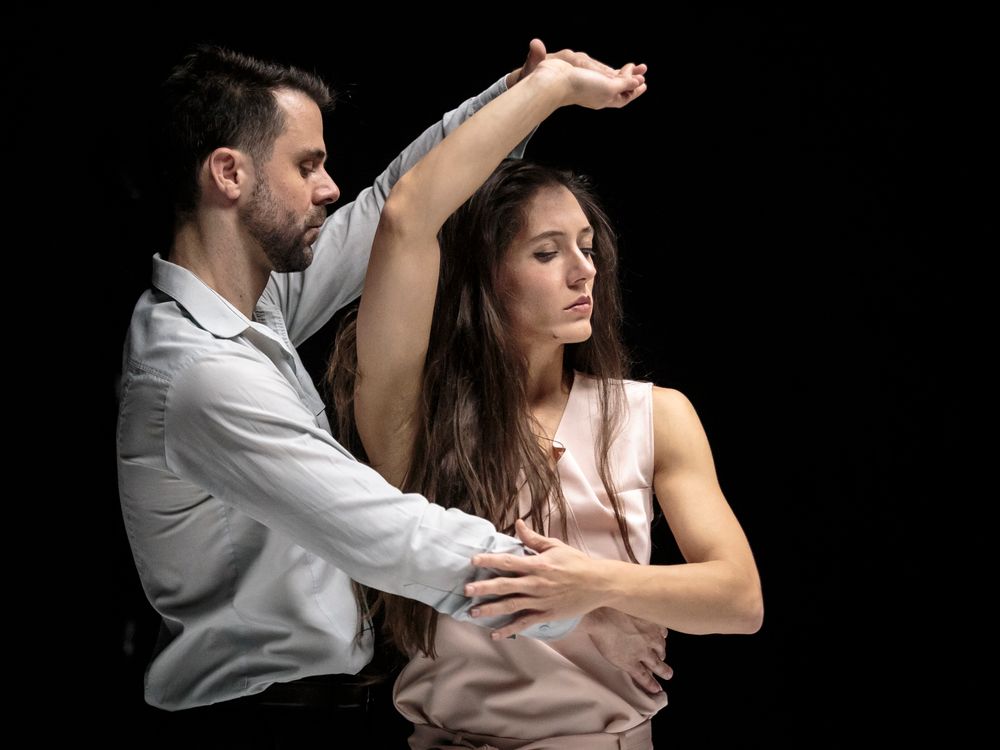
Zoltán Grecsó’s and Beatrix Trisha Simkó’s duo puts Orpheus’ and Eurydice’s mythos in
today’s conditions, giving a special interpretation to this so many times presented
love story.
Now, Eurydice will be expelled to the hell of our present world. Of course, she will
be followed by his lover, the famous singer of the Greek mythology, but even
though Orpheus understands the language of the animals, this world is and
remains unfamiliar to him, and suddenly he gets helpless and incapable – he has
no vigor to confront the ethos of the 21st century.
He tries to adjust to Eurydice’s new lifestyle, but Orpheus is not able to alter
himself: his internal rhythm, which is different and slower than that of the beloved
woman’s, does not match the everyday of his changed lover. Their love, which
was believed to be immortal, even to survive death itself, will be in danger. The
happy, ageless slowness will be uninterpretable in the caducity and quickness of
the present.
Once again, Orpheus enters the underworld to find his lover, but this time their
relationship becomes hell.
The dancer duo presents the conflict between the world of myths and the realities
of the present, but dramatically it offers even more, by demythologizing their
heroes themselves. Orpheus and Eurydice do not have to fight gigantic
adversaries, like death. Their inglorious but at the same time hard fight will be
about the everyday, the change, and the different world views.
This is an exciting challenge, to code this momentary collision, presenting
dissonance and diversity in the language of motions only. Dance allows to show
the mainspring of human relationships, the internal forces generating unsolvable
conflicts.
In their duo, Beatrix Trisha Simkó and Zoltán Grecsó accumulate their experience of
years of working together, using Dániel Dömölky’s clear scenography construction,
in the atmosphere created by sound designer Ábris Gryllus.
Angolul:
Choreography, dance: Beatrix Trisha Simkó, Zoltán Grecsó
Music: Ábris Gryllus
Set design: Dániel Dömölky
Costum: Petra Földi
Production manager: Brigitta Kovács
Production assistant:
Producer: Pro Progressione
Special thanks to: Anita Vodál, Stefánia Ágoston, Anna Bagi, Eszter Kálmán, Bálint Nagy, József Pető, Tamás Reich, Borbála Sebők, Ádám Szellő, Anikó Zsalakovics