Big Bang. Expanding horizons for collections

Since the museum was founded in 1989, its collection has grown by more than a thousand items. The collection exhibitions, held at regular intervals, are mostly curated selections based on specific themes, characteristics, and perspectives. The period spanning some seventy years in which the works were created also means that the selections are based on works from different eras and thus different contexts. In addition to reconstructing and preserving the original contexts and meanings, the historical perspective allows new connections to be explored and other contexts to be revealed.
The Big Bang compilation presents the development of the museum's collection based on the temporal distribution of its acquisitions. This chronological unfolding is intersected by the logic of a thematic approach: following the exhibition's own timeline, divided into separate sections, visitors can encounter unique cross-sections of the constantly growing collection. To use an analogy, the selection is like a "family history" told in parallel narratives, or, if you like, the collection's family album, which also features a number of previously unseen "relatives" (works), while also conveying the micro-history of each work, the focal points of the collection, and the criteria for collecting.
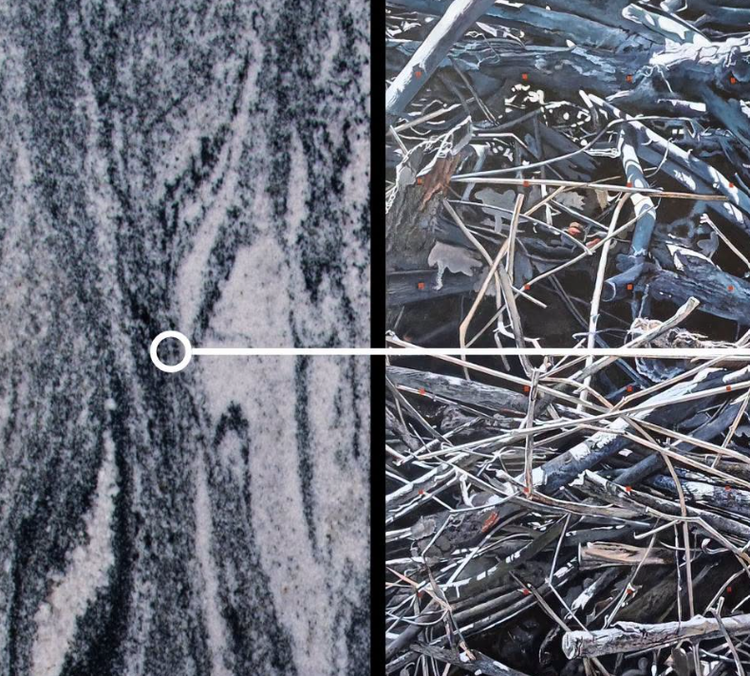
The selection does not necessarily follow art-historical stylistic concepts. Instead of aesthetic categories, it focuses on more comprehensive themes and leitmotifs. In the twelve units, the curator explores themes such as the influence of pop culture on art, the idea and concept as a work of art, hyperrealism that goes far beyond technical bravura, and the post-contemporary concept, which has become widespread in recent years and is not without its contradictions, to describe a characteristic group of works of art. Through the exhibited works, visitors can reflect on street art, the place and role of graffiti in contemporary art, the significance of machines and movement, or ecological art that focuses on environmental awareness and nature conservation, which goes beyond the walls of galleries and becomes an active part of the social dialogue about our environment.
The Big Bang is a commonly used term in the so-called standard cosmological model of the origin of the universe, according to which our world was created from a dense, hot state through an explosive expansion (the Big Bang) about 14 billion years ago.
In the context of the exhibition, the concept refers above all to the fact that the museum's collection has been growing dynamically since its foundation, both in terms of quantity and quality: the initial collection has expanded many times over, while new genres, techniques, and artistic media have appeared in it. In addition, the museum's universal and domestic collection has also changed, extending to new cultural-geographical regions (Southeast Europe) and countries (e.g., Albania, Kosovo, Ukraine, etc.), as the circle of artists represented in the collection continues to grow.
The Big Bang is therefore a kind of metaphor for describing and characterizing the construction of the collection starting from its original source (foundation) as its origin.
Schedule
The collection in numbers
Number of works: 1062
Number of artists: 498
Nationalities: 23
Time frame (from-to): 1957–2025
Focus period: 1970s, 1990s
Exhibiting artists
A-ONE, BORI Bálint, Joseph BEUYS, BUKTA Imre, CSATÓ József, David CSICSKAN, Attila CSÖRGŐ, DAZE, Jiří DAVID, Hervé DI ROSA, Károly ELEKES, Róza EL-HASSAN, Richard ESTES, László FEHÉR, Nat FINKELSTEIN, Andreas FOGARASI, János FODOR, FUTURA 2000, Gérard GASIOROWSKI, Sighard GILLE, Domenico GNOLI, Ion GRIGORESCU, Kitti GOSZTOLA, Gyula GULYÁS, Péter Tamás HALÁSZ, Flaka HALITI, Sámuel HAVADTŐY, Bernhard HEISIG, Geoffry HENDRICKS, Judit HERSKO, Jenny HOLZER, Gideon HORVÁTH, Oto HUDEC, Jörg IMMENDORF, KANEUJI Teppei, Lesia KHOMENKO, KICSINY Balázs, KINDER Album, KISSPÁL Szabolcs, KORTMANN-JÁRAY Katalin, LADY PINK, LAKNER László, Jean-Jacques LEBEL, Roy LICHTENSTEIN, LLRRLLRR, Ilona LOVAS, Ciprian MUREŞAN, Imre NAGY, T. G. NAZARENKO, Csaba NEMES, Márton NEMES, NOC 167, István NYÁRI, Jefhen NYIKIFOROV, Gyula PAUER, PENCK A.R., Dan PERJOVSCHI, A. Ny. PETROV, Uwe PFEIFFER, Pablo PICASSO, Gábor PINTÉR, Valéria SASS, Konrad SMOLEŃSKI, Tamás ST.AUBY, Volker STELZMANN, Mladen STILINOVIĆ, János SUGÁR, Ágnes SZABÓ, Beáta SZÉCHY, Teofan SZOKEROV, Joe TILSON, Jean TINGUELY, TOXIC, Kata TRANKER, János VETŐ, Wolf VOSTELL, Andy WARHOL
Curator: József Készman
*** Translated with www.DeepL.com/Translator (free version) ***
Ludwig Museum
The Ludwig Museum - Museum of Contemporary Art, located in Müpa, is the first museum in Hungary to exclusively collect contemporary art. In addition to a permanent exhibition of the collection donated by the Ludwigs and a number of temporary exhibitions, the museum aims to raise awareness of the works and their creators through special publications and a variety of art education and art education programmes.