Ádám Urbán: The secret life of the botanical garden | Photos from the National Botanical Garden in Vácrátót

Workplaces and living spaces: parallel universes
In a large group of documentary photographs, Ádám Urbán provides insight into the everyday lives of people from different professions and professional collectives, revealing the social, functional, cultural, and emotional layers associated with these careers. In his long-term work, often spanning years, he does not act as a neutral observer, but rather as an insider sensitive to the internal dynamics of communities, providing a picture of the unique character of the activities taking place in institutions and workshops. In addition to depicting the physical environment of these places, he is primarily interested in the role and situation of people.
One of his best-known works, dating from 2010, follows the daily life of the Budapest Grand Circus troupe. His portraits of acrobats, clowns, and aerialists simultaneously reveal the contrasting challenges faced by those who work with their bodies: reckless courage as well as vulnerability and fragility. Remaining in Budapest's City Park, in 2013, before its closure, Urbán created an almost anthropological visual diary of the amusement park's constructed spaces and and its equipment, with a particular emphasis on the people who have worked there for decades, as well as the ice rink maintenance staff and other employees in the photographs celebrating the 150th anniversary of the ice rink (2020).
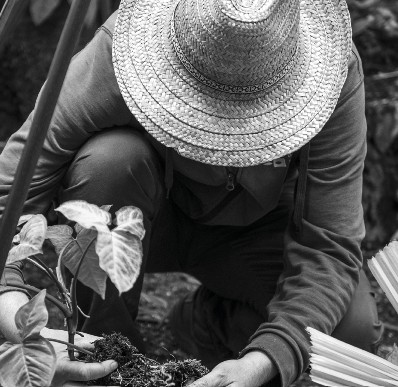
Ádám Urbán has long been interested in the special milieu of fauna and flora in enclosed spaces; he has worked in numerous domestic and foreign zoos and botanical gardens. After learning about the diverse tasks of the National Botanical Garden in Vácrátót, he was attracted by the presentation of the responsible and intensive processes of scientific work. Through his relationship with the Garden's management and staff, he photographed regularly in Vácrátót for a year starting in 2024. The resulting series of images not only showcases the various units of the Botanical Garden and the roles of those who work there, but also how the rhythm of the seasons shapes the ever-changing, lively space of the arboretum. The Garden presents 13,000 plant species and varieties in a 200-year-old landscape garden, characterized by its rugged terrain, lake system, artificial waterfall, spacious clearings, and garden structures. The Botanical Garden is a nationally significant nature reserve and monument, a gene bank, an inexhaustible treasure trove of research and education, and a living museum. Its four main collections are the Dendrology Collection, the Systematics Collection, the Perennial and Rock Garden Collection, and the Greenhouse Collection.
Schedule
An unbreakable bond
The interaction between water, plants, and light helps humans adapt to the changing seasons and attunes them to the rhythms of nature. The word ecology can be traced back to the Greek word oikos, which originally meant house, but we also translate it as household, and all the inhabitants of the house live together in the household. In his book Együttéléstan (Living Together), András Lányi writes about this family circle as follows: "The environment understood as a household is not merely the place where we live, but the way we live: everything we do when we maintain a house and take care of ourselves and our loved ones." Ádám Urbán's photographs show that the botanical garden is not just a static space, but a living, breathing world that requires constant care and attention from those who work there. In this approach, the photo series draws attention to the inseparable interdependence of plants, animals, and humans, while helping to raise awareness of the insights that come from the power of care and nurturing.
Curator: Zsuzsanna Tulipán
Kunsthalle Budapest
The largest exhibition hall in Budapest, in Heroes Square, just the opposite the Museum of Fine Arts.