curated by hoast: What does it mean to see a dog in a dream?

Guardian and threat, familiar and uncanny, a dog is a creature stationed at the threshold between the known and the unseen. What does it mean to see one in a dream? Could it be premonition or warning?
The artists are connected through hoast, an artist-run space in Vienna: as its founders, as artists who have exhibited there, or whose exhibitions are scheduled for the coming year. The exhibition also reflects hoast’s programmatic approach. Yet when artists curate, it is not necessarily a manifesto-like theme or theoretical construct that brings works together, but rather a feeling or a premonition. An exhibition exists before it has a title.
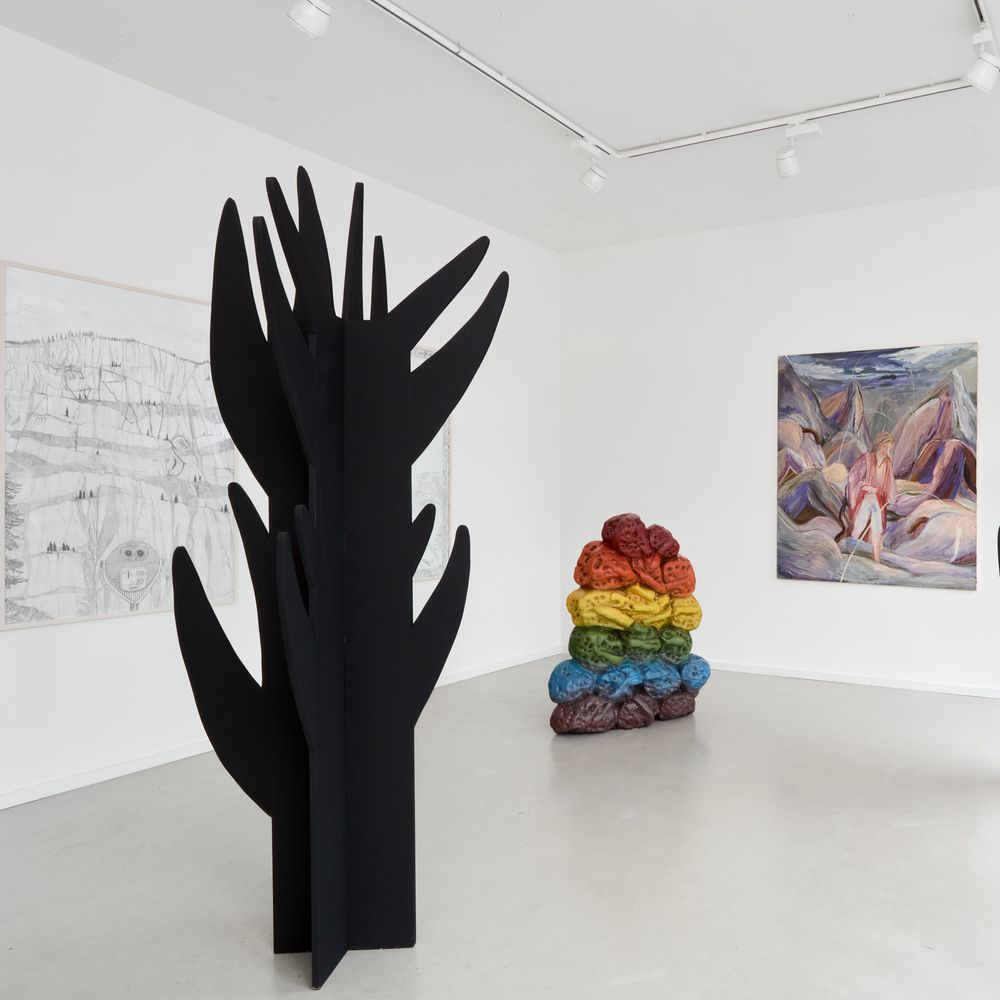
The works belong to a pictorial tradition in which human and animal pass into one another and the anthropomorphic becomes object. The scenes give philosophical concepts a visual form and unsettle the familiar through unexpected encounters.
Schedule
Exhibited artists:
Marta Beauchamp,
Maria Bussmann,
Wolfgang Obermair,
Ekaterina Shapiro-Obermair,
Nazım Ünal Yılmaz
“What does it mean to see a dog in a dream?” – this is the question posed by the title of the guest exhibition at Liget Gallery, presented by the Vienna-based artist-run exhibition space hoast. If anyone in Hungary sets out to interpret dreams, they will quickly come across one of the foundational works in many home libraries, a favourite reference of our grandmothers, Gyula Krúdy’s Álmoskönyv (The Book of Dreams), whose very first edition was published in 1920 and has since seen countless revised and modernized reprints. One of the sources for the research conducted before writing the book was Álmos könyvetske (Little Book of Dreams), written by an unknown author and published in 1756, which summarizes our ancestor’s dreams and their interpretations within our region. This historical overview is also important because if we were to look for the meaning of the dog in Krúdy’s work, to this day we would find the explanations under the archaic term “eb” (hound). Surprisingly, the book offers us half a page’s worth of possibilities to decipher what the dog we saw in our dream means.
Folk dream interpretation obviously can’t provide a simple, exact explanation for our question, and this is hardly surprising, since a dog can represent so many things even while we are awake.Based on this, dream interpretation seems like an impossible undertaking, but perhaps that’s because we consider each of our dreams to be unique. And indeed, the fact that brain function varies from person to person makes our dreams unique as well, although (not counting the rare cases of shared, identical dreams that science has not yet explained) there are certain patterns and similarities, especially among people living in similar social structures. Such dreams are certainly easier to decipher and interpret, and they function similarly to memories of social milestones. Regardless of our social background, we have recollections of our family, our home, the defining events of our childhood and life situations, both uncertain and retaining. Our memories, similarly to our dreams, can transcend beyond our individual consciousness.
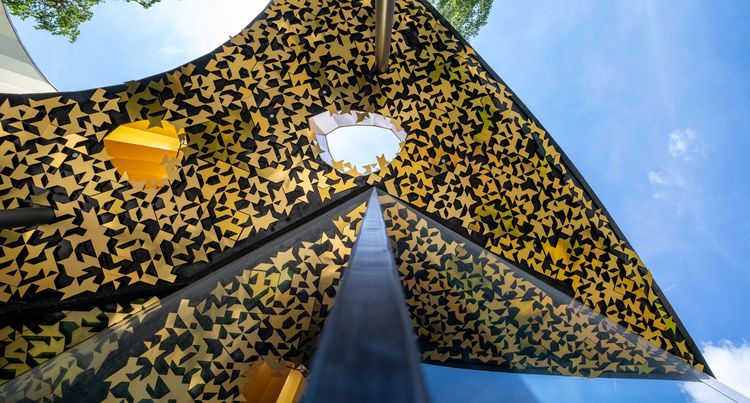
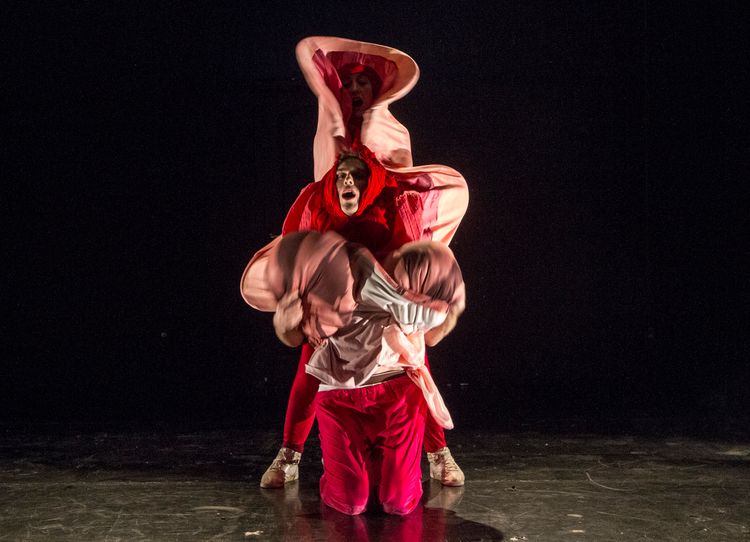
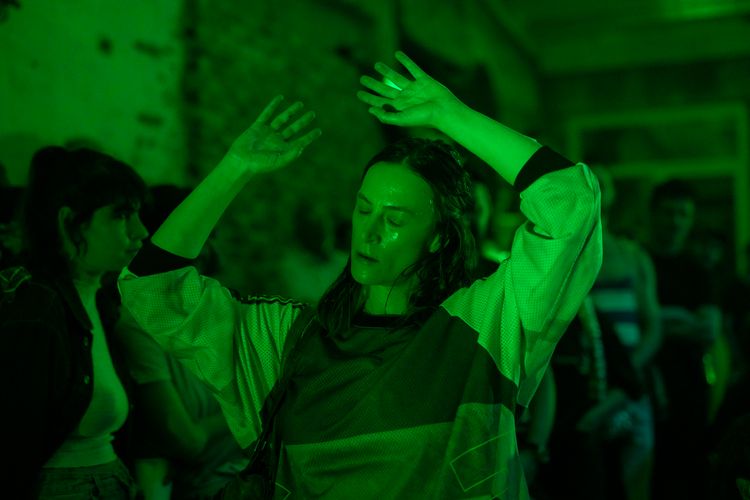
The works curated by hoast also extend beyond subjective narratives. The exhibition provides an opportunity for the members of a loose-knit community to showcase their art, alongside the works of the founders, pieces by artists who have previously exhibited or will soon exhibit at hoast are placed side by side, following a chain of associations defined by the artists themselves. No dream book is needed to decipher that the collection of works on display creates diverse landscapes within the intimate space of Liget Gallery, where we can wander around just as we wish. Maria Bussmann’s drawings depict philosophical texts using landscape and metaphors of nature, while landscape morphs into bodies in Nazim Ünal Yilmaz’s painting, creating an absurd yet humorous scene in which it is hard not to see a form of queer spatial occupation. Ekaterina Shapiro-Obermair’s unsettling trees seem to sprout foliage from wings while among their shadows, Wolfgang Obermair’s rainbow-colored structure, showcasing the ruins of a building belonging to a diverse community offers both resolution and vivid contrast. With its otherworldly presence, it also serves as a vantage point from which we survey this landscape. Marta Beauchamp’s experimental musical composition brings life to the mechanical elements of the sound system next to various objects, a cello, ropes and her own body. The audio recording of the musical performance at the opening becomes an integral part of the exhibition, adding a new dimension to the space.
If we know that animals dream as well as humans do, and we also know that there are still countless phenomena on our planet that science can’t explain, it is not impossible that every element of landscape and nature possesses the ability to dream. Everything that lives and everything that feels may dream. Maybe even of a place which is based on the values that hoast conveys through art: solidarity, accessibility and dialogue.
Dalma Eszter Kollár
On view: 28 October – 4 December 2026.
Address: Liget Gallery (Ajtósi Dürer sor 5., Budapest 1146)