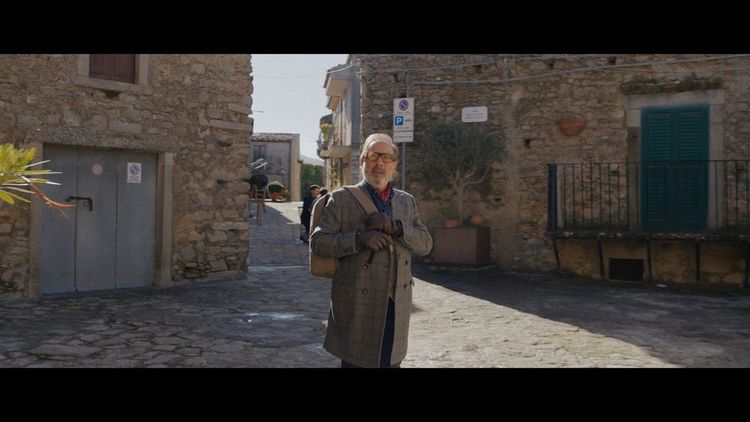
The painter paints himself | Frissen 2026

“Every picture painted with feeling
is a portrait of the painter, not of the model.”
(Oscar Wilde: The Picture of Dorian Gray)
“Ogni dipintore dipinge se” – that is, “Every painter paints himself” – is a phrase quoted by Daniel Arasse in the afterword to his famous book *The Artist in the Work*. Apart from the fact that in the 15th century this phrase was attributed to a number of highly influential figures (including Brunelleschi, Savonarola and Leonardo da Vinci), the idea captures something essential: ‘there was a sense in the air of the age that a work áúőof art inevitably resembles its creator, whom we “recognise” in it’¹. Interestingly, unlike writers, the visual artists of the period were not enthusiastic about this proposition. Arasse explains this as follows: ‘If painters were to accept that “every painter paints himself”, they would at the same time have to acknowledge that something of a craft-like nature creeps into their art, and that they are incapable of demonstrating sprezzatura—that elegant nonchalance through which ‘art conceals art’—which was then beginning to become the socialised model of artistic behaviour. ”2 Furthermore: “…in this formulation, one of the fundamental issues of the Renaissance is revealed, namely whether it is possible to establish that ‘the artist’s individuality’ plays a key role in the creation and representation of forms, as well as in their history.” 3 We shall not set out Arasse’s line of thought in detail; we shall merely follow one line of interpretation in preparation for the conceptual framework of the present exhibition. In his collection of essays, Arasse sought to understand “how the artist—the person who painted the work—is revealed in the work itself”.4

Schedule
Painting centred on the individual artist reached its peak with Kant’s aesthetics of genius and the Romantic era. It was precisely at this time, almost two hundred years ago, that a crisis arose, ostensibly as a result of a technical discovery – the invention of photography – and ever since then the question of painting’s raison d’être has arisen time and again. Looking back from the present, it is clear that these debates have always flared up as part of larger paradigm shifts and crises affecting society as a whole. It is also clear that Rodchenko’s 1921 triptych *The Death of Painting* – which ‘depicts’ the three primary colours – with its extreme reductionism, did not bring painting to an end, but rather, together with other avant-garde artists, gave it new impetus. Similarly, we do not read the critic Douglas Crimp’s paradigmatic 1981 essay *The End of Painting* as a prophecy heralding the end of painting, but rather as a critique of society and capitalism, which approached the problems of painting from the perspective of the painting’s transformation into a kind of luxury commodity.
Aesthetic and philosophical self-reflection has always been part of painting, as has social reflexivity; thus, paradoxically, it has emerged from debates of this nature all the stronger. In light of this, we are justified in asking: why do painters paint today? The ‘Frissen’ exhibition, now in its seventh year, seeks to answer this very question.
Perhaps the most exciting aspect of the parallel solo exhibitions is that they allow us, as we wander from room to room, to discover ever new forms of painting, methods and systems of thought. Artists who have exhibited at previous exhibitions have worked in a variety of genres: alongside painting, printmaking, sculpture and installation art, we have also been able to showcase works in numerous other genres in the rooms dedicated to individual artists. In 2023, we organised a selection dedicated specifically to sculpture, which offered a new experience in terms of the interplay between works belonging to a single genre. Similarly, this year’s selection focuses on painting. As on that occasion, the institution’s curators have once again selected six painters to enable visitors to gain a deeper understanding of this particular art form. Whilst these are not retrospective exhibitions, the selected works nevertheless offer an insight into the mature body of work of each artist. Among the works on display, there are figurative and abstract paintings based on their representational methods; in terms of style, they may be painterly or draught-like, whilst the themes of the depictions range from mythological to everyday. In other words, regardless of genre, the artist’s style, concept, way of thinking and habits are all reflected in their work.
This year’s exhibitors, to whom we would like to express our gratitude: Ákos Bánki, Réka Kaszás, Gábor Király, Kata Könyv, Tamás Menyhárt and Kati Verebics.
Mária Kondor-Szilágyi, Chief Curator of the Műcsarnok
Kunsthalle Budapest
The largest exhibition hall in Budapest, in Heroes Square, just the opposite the Museum of Fine Arts.