Csak tárgy // Sudár Péter kiállítása

Schedule
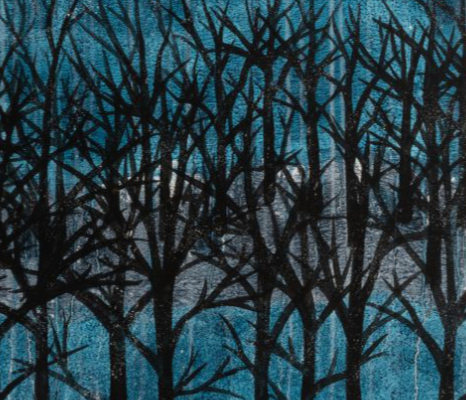
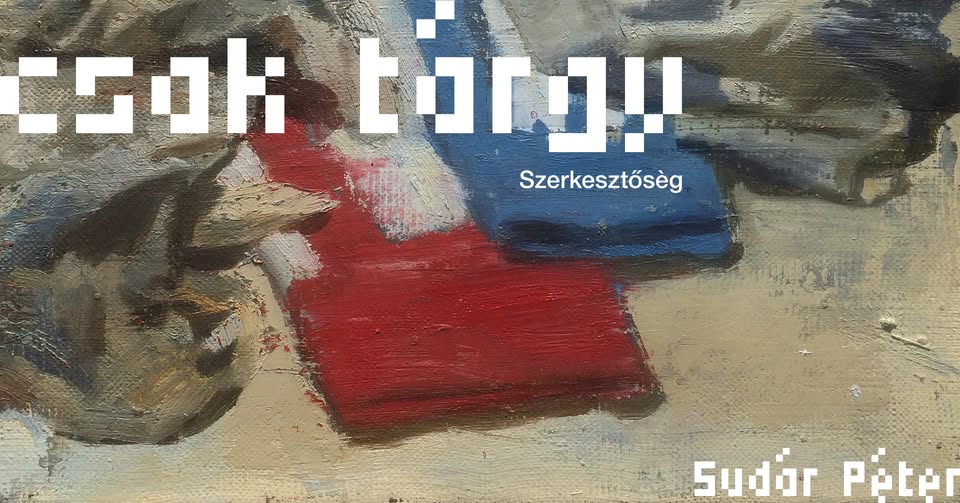
It’s as if someone had walked into a stranger’s room, pulled out their flip phone, and photographed the entire space with a thoroughness that would put crime scene investigators to shame. Yet there is no trace of either a victim or a perpetrator: we see only ordinary objects, which we nevertheless recognize at first glance from a few distinctive brushstrokes. A haphazard jumble of clothes, shoes, and other items, a teapot, a father—as if the gaze itself were becoming the object. The “evidence” is neatly arranged, like an elegant and measured retrospective of a triumphantly concluded case.
Instead of the sometimes absurd activation of those silky, shiny Adidas tracksuits—which previously appeared as objects embodying a Western desire formulated from the East—now only the iconic logos of our contemporary armor glimmer in the grayer interiors crammed with other objects. Even the familiar image of the father appears only fragmentarily and distorted, while a row of shoes—worn out over the years yet still instantly recognizable—borrows the outward appearance of seemingly well-stocked stores, simultaneously creating the artist’s personal inventory and a monumental artistic monument to our banal times.
The images are arranged with an elegance foreign to the alternative art spaces of the ultra-contemporary and “post-post” eras, and at most, they may remind one of the ivory-tower-white “white cubes” of Western commercial galleries, which are intended to emphasize the scarcity of their wares. In works exhibited in such spaces, we typically find either despicable or celebrated—primarily human—flaws in need of correction, or states that transcend the human and represent a desired ideal. Péter Sudár, however, takes a more objective approach: the images from his personal exploration demonstrate that, alongside the splendor of great eras, their patina also belongs in our everyday lives today. It is enough to approach these seemingly insignificant everyday moments with the same perspective one might adopt as a student or a teacher—using a concept important to the artist: “paid freedom.”
Péter Sudár graduated from the painting program at the University of Pécs in 2006; subsequently, he not only crossed over to the other side of the lectern to become a teacher at the Zirc Art High School, but also held his first solo exhibition overseas in 2008, at the Nicodim Gallery in Los Angeles. He continued his work as both a teacher and a painter both concurrently and thereafter. His practice showed a consistent affinity with the figurative painting of Central and Eastern Europe in the early 2010s, as well as with post-socialist and realist tendencies—including those often referred to as the “Cluj School.” Sudár has participated in several major international exhibitions alongside representatives of earlier generations. Just as he had refused to conform to the aesthetic and thematic expectations of his time during his studies, neither his international successes nor the evolution of the global art discourse have derailed his creative program: “Fashions change, but style is eternal.”
Opening: November 19, 2026, 7:00 p.m.
The exhibition will be opened by Mátyás Korányi, poet
Curator: Ferenc Domokos
On view through January 15, 2027
Szerkesztőség
Kávézó, designbolt, kiállítótér és nyitott szerkesztőség, találkozási pont Buda szívében