Blue hours. Three evenings on fluidity // Trafó

A series of events with performances, film screenings, texts and music.
Schedule
Participating artists: Pauline Boudry - Renate Lorenz, Sharon Hayes, Horváth Gideon, Muskovics Gyula - Molnár Csaba - Janky Máté, Paul B. Preciado, Lili Reynaud-Dewar
Curators: Horváth Gideon, Muskovics Gyula, Szalai Borbála, Szalipszki Judit
Like the blue clocks, which refer to the transitional period between day and night, the focus of the Trafó Gallery's series of events is on approaches that are in a state of constant transformation and intersection, allowing space for intermediate positions outside of systems defined along social norms and binary concepts. During the three-day series of events, the boundaries of genres and roles dissolve; the installations, video works, performances, music, theoretical texts and films on display condense into fluid evenings.
Detailed programme
1 June 2023 (Thursday) 19:00 - 23:00
19:30
Máté Janky, Csaba Molnár, Gyula Muskovics: The Last Hour
Performance performance (90 minutes)
Venue: Trafó Gallery
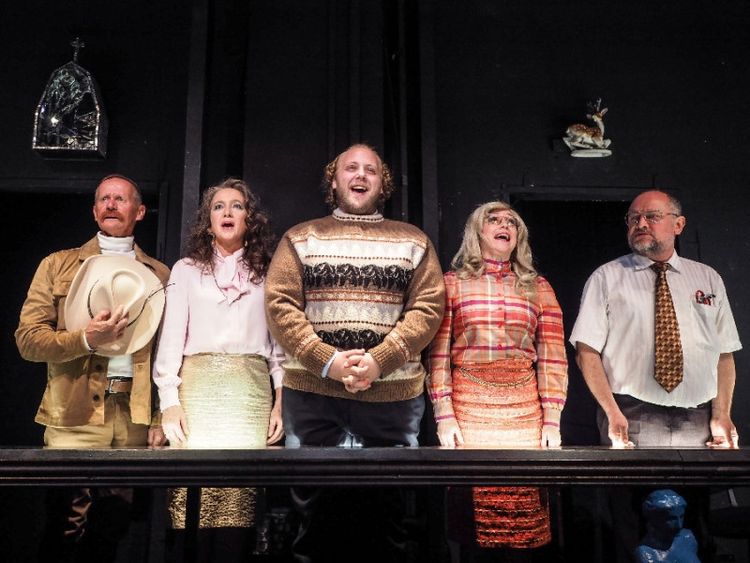
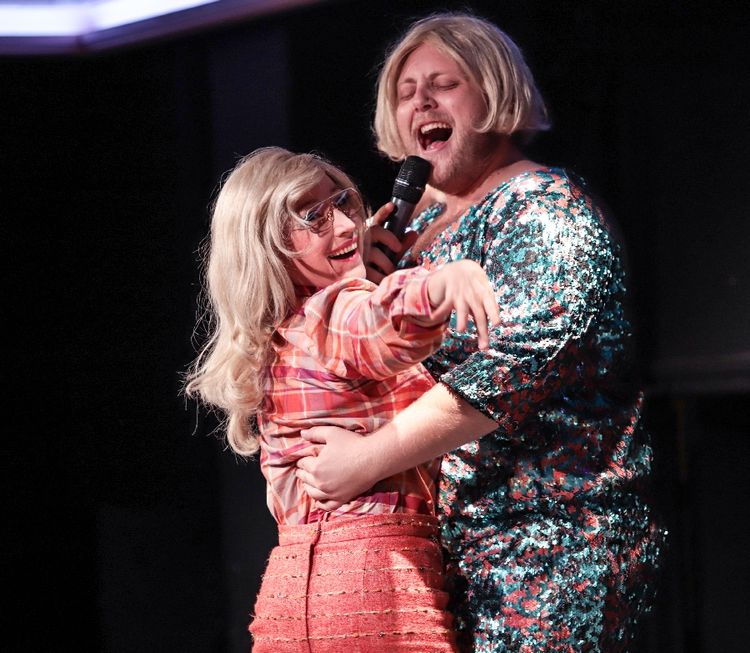
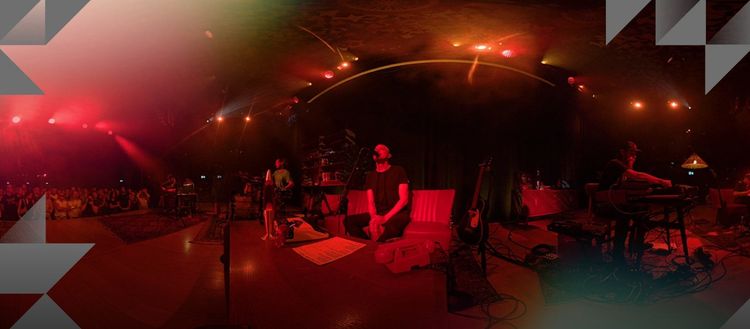
Máté Janky, Csaba Molnár and Gyula Muskovics launch the Blue Hours series with an ever-changing performance-performance using dance, text, video, installation and experimental electronic music.
Throughout the evening they will explore the place of queer monsters in homonormative society through film, visual art and literary references. The term, coined by Lisa Duggan in the early 2000s, refers to the conformist, mainstream gay and lesbian milieu and its politics of assimilation that support heteronormative values. The adoption of such ideals leads, according to Canadian filmmaker Bruce LaBruce, to the disappearance and, therefore, the death of the radical nature of gay culture.
The Last Hour lecture is based on the essay A person who functions normally in a sick society is himself sick by Gyula Muskovics, in which the author analyses, among other things, LaBruce's 2008 film Otto; or Up with dead people. The film's radical feminist character, Medea Yarn, makes a political gay porn zombie film because she believes it is the only logical response to the toxic system we are forced to live in. The Last Hour is both a tribute to LaBruce's work and a reference to the work of queer classics such as Charles Henri Ford and Derek Jarman.
In addition to the installations created by the artists, the performance will also include Klaudia Janusko's Begin the awakening you've always wanted (2022).
21:30 - 23:00
Surprise film screening related to the theme of the day in the gallery
2 June 2023 (Friday) 19:00 - 22:00
19:00
Gideon Horváth: On Essence
Performance-performance and installation
Venue: Trafó Gallery
"I'm telling you a lie, but I want you to believe it! Two days ago, at dawn, a spring of water from Hévíz emerged with irresistible force in the gallery space. The hot steam of the hitherto latent thermal water finally escaped and filled the whole space. The intoxicating medium of minerals makes us all dizzy. In the billowing vapour, our boundaries blur, our rules become meaningless and dissolve. What are we left with? I'll tell you a lie, but I want you to believe it! The water of the spring is dried up. Instead, slowly but surely, pure essence is bubbling up. Thick, hot, sticky, dark amber, it is dangerous and unleeching. Let us gather round, for I tell you a lie, but I want you to believe it."
The performance starts at 7pm, late arrivals will be admitted after the performance.
20:00
Paul B. Preciado: Orlando, my Political Biography
Screening (98 min), in French, with English subtitles
Venue: Trafóklub
Paul B. Preciado's Orlando, My Political Biography blurs the boundaries between reality and fiction. The film is based on the novel Orlando: An Autobiography by Virginia Woolf, whose protagonist changes sex in the middle of the story and becomes a woman at the age of 36. The film's director organised a casting call, inviting twenty-six trans and non-binary people aged between 8 and 70 to play the role of Orlando. Preciado presents the stages of her personal journey through authentic speeches, writings, reflections and images. As Preciado says, "all Orlando is transgender, who risks his life every day as he is forced to confront the law, history and psychiatry, as well as traditional ideas of the family and the power of multinational pharmaceutical companies". The film stresses that "if men and women are ultimately political and social constructs, then the shift is no longer just about social gender, but also about poetry, love and skin colour".
21:00
Informal discussion and music after the film in the gallery
3 June 2023 (Saturday) 14:00 - 22:00
14:00 - 16:00
Hangover Reading Club
The reading circle will be held by Dóra Kata Kiss, a student of the PhD programme in Critical Psychoanalysis at the University of Pécs, and Gideon Horváth, visual artist.
For more information and a list of texts to be discussed at the Reading Club: https://trafo.hu/hangover_reading
16:00 / 17:30 / 19:00 / 20:30
Sharon Hayes: Ricerche: Three, 2013 (38 min)
Pauline Boudry / Renate Lorenz: I Want, 2015 (two-channel video, 16 min)
Lili Reynaud-Dewar: Rome, November 1st and 2nd, 1975, 2019 (42 min)
video streaming
Location: the Trafó Gallery
In the third episode of Sharon Hayes' multi-film Ricerche, Hayes talks to students at a Massachusetts girls' college. The setting of a girls' college is a particular world in the world: an institution thought by some to be obsolete, by others progressive and safe; a milieu of dissenting yet sustaining opinions that offers the opportunity to experience and experiment with shifting identities. In the polyphonic video, normative and trans-normative ideas, fantasies and expectations about gender, cultural identity and the girls' college environment are articulated, while the social context that frames these experiences is filtered through personal opinions and experiences.
Hayes's film is based on Pier Paolo Pasolini's 1963 interview film Comizi d'amore (Conversations on Love), in which the director interviews street people, students and workers in different regions of Italy, asking them about love and their sexual habits, including taboo subjects.
The protagonist of Pauline Boudry and Renate Lorenz's video I want, played by Sharon Hayes, the creator of Richerce: Three, which is screened in the programme, speaks to us from different positions. In a monologue composed of words by punk feminist writer Kathy Acker and former Wikileaks leaker Chelsea Manning, the roles slip into each other in sometimes elusive ways, and the notion of self is presented as something in dynamic flux, conditioned by external and internal processes.
The video by Boudry and Lorenz also draws on Kathy Acker's practice and poetic strategy of writing through appropriation and rearrangement of textual passages, but the work does not only work with quotations in the field of texts and characters: the video rearranges the situation of Acker's 1977 reading in Canada.
Lili Reynaud-Dewar's Rome, 1er et 2 novembre 1975 also uses the method of re-enactment: Reynaud-Dewar stages her last interview with Pier Paolo Pasolini, made before and on the day of his death, mainly with friends, colleagues and collaborators, and the artist himself appears in a role in the film. In the video, Pasolini's reflections on fascism, violence, education and subjugation, drawn from his personal experiences, are interpreted by civilian contributors. In the second part of the film, the relationship between Pasolini and his lover, Pino Pelosi, who later became his murderer, unfolds, recalling Albert Ferrara's 2014 film Pasolini. The sound and visual cuts of the film, which is structured along a fragmented narrative, constantly jolt the viewer out of the certainty of knowing who is speaking and from what position. The relationship between the interlocutors in the film is also difficult to pin down: the multilingual dialogues are organised by relations of subordination and supremacy.
"We are all in danger." - Pasolini proposes this title for an interview with him the day before his death, lending a particular haunting quality to the conversation. What are the dangers for us in 2023 if we think of identity as a frozen construct? And how can we adapt to the liquid state of being that defines our times?
The films are presented in English with English subtitles. The 90-minute selection will be screened four times, starting at 16:00, 17:30, 19:00, 20:30
All events in the series are free of charge
Trafó House of Contemporary Arts
The Trafó House of Contemporary Arts in Budapest is a unique venue in Hungary, embedded in the international contemporary scene, where different genres - theatre, dance, new circus, music and visual arts - are presented in a unique and authentic way.