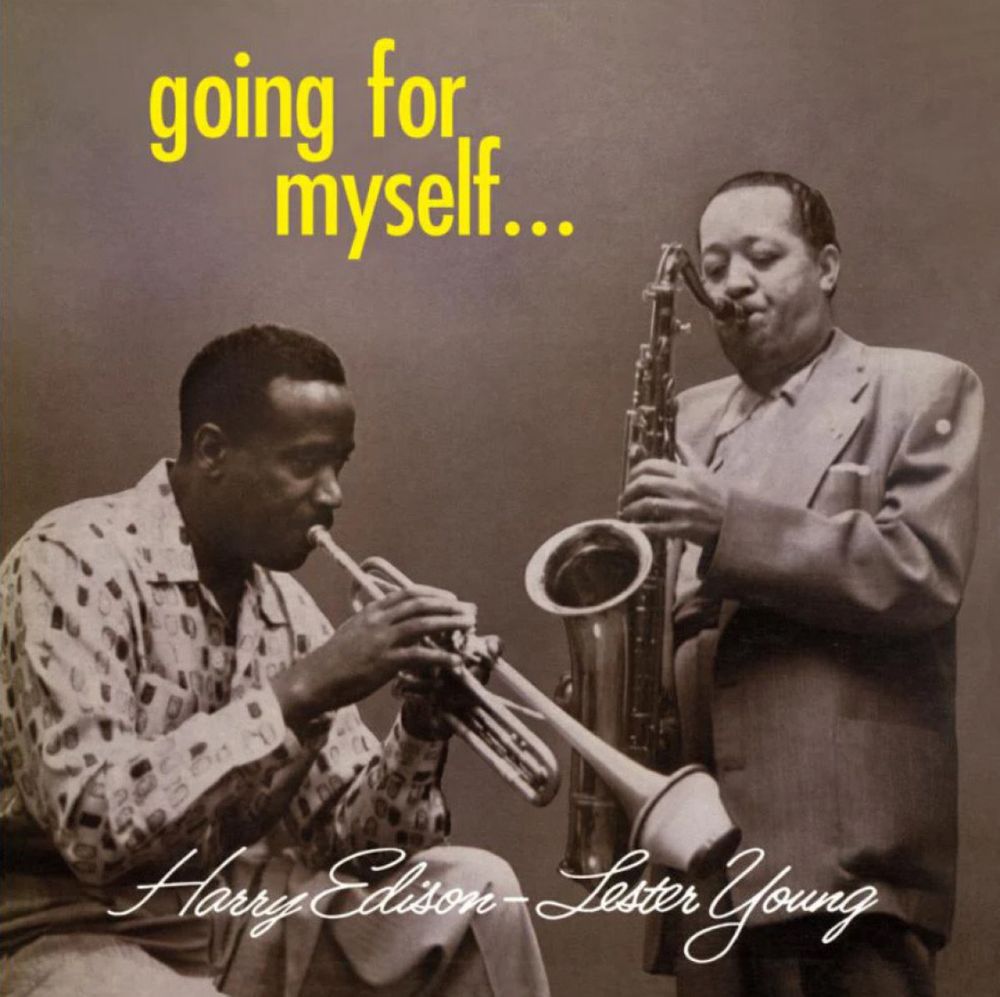
MAO LEGENDARY ALBUMS | HARRY SWEETS EDISON: GOING FOR MYSELF

In the Legendary Albums series, the Modern Art Orchestra performs material from albums of particular significance to jazz history. The concerts are not only a tribute to jazz legends and their works - the workshop behind the Legendary Albums is also a process of development. The musicians of the MAO study and internalise all of the current album material, leaving the musical structures and instrumentation intact for the performances. As improvisation and soloistic expression are essential components of the jazz language, the musicians naturally perform improvised solos at the concerts. Thanks to the respect for original compositions and orchestrations and the improvisations of musicians of the quality that the Modern Art Orchestra is known for, the Legendary Albums bring listeners into contact with the tradition of jazz masterpieces and guarantee a fresh musical experience. In the autumn season, the orchestra will commemorate two centenaries, while the other two evenings will bring back memorable collaborations.
Schedule
Two of the colossal, defining figures of the Count Basie big band rendezvoused on this recording, with a fitting accompaniment. The record was released under the name Harry Sweets Edison (1915-1999), but the presence of his friend of decades, Lester Young, is perhaps even more memorable. Sadly, Young's failing health meant that he made few recordings after this one, and he died the following year at the age of 49. However, "Sweets" was well worth his Jazz Master award in 1992. The period 1957-58 is considered rather transitional in jazz history, but these two soloists, plus one of their pianists, Oscar Peterson, and a few others, notably Ella Fitzgerald, had by then developed to such perfection a witty, to-the-point, serious, no-frills, small band jazz, especially on the Jazz At the Philharmonic series, that it became the standard from which they would not have to deviate much in the next few decades.
Edison's trumpet playing already stood out in the 1930s for its bright, natural, communicative, sustained sound with interesting variation. Over time, his solos evolved, his taste impeccable. All the singing giants of the era, from Billy Holiday to Sinatra, called on him. Young's depth of feeling, his artistic genius, his grasp of the complexity of the world, is different from Edison's, but it is perhaps this contrast that makes their harmony so perfect. Young also plays clarinet in two numbers, the others always giving him as much space as he wants. Of course, one could hardly imagine a better rhythm section than Peterson - Herb Ellis - Ray Brown - Louie Bellson at this time. Young's fading power, but unbroken beauty, will be evoked by János Ávéd.
Opus Jazz Club
Adventurous European jazz and great Hungarian cuisine in the heart of Budapest