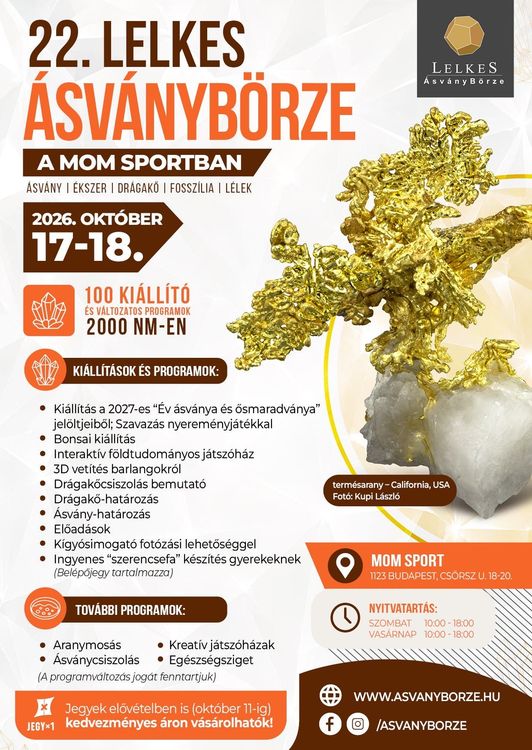
Flódni improv theatre X Kiscelli | Museum - funny city history

FLÓDNI improv theatre & Kiscelli
Museum – funny city history
Who cooked it: Judit Stahl, the well-known television personality.
The famous saying that “Humanity says goodbye to its past with a laugh” does not mean that what is behind us is ridiculous. It means that it is easier to get to know it while having a good laugh.
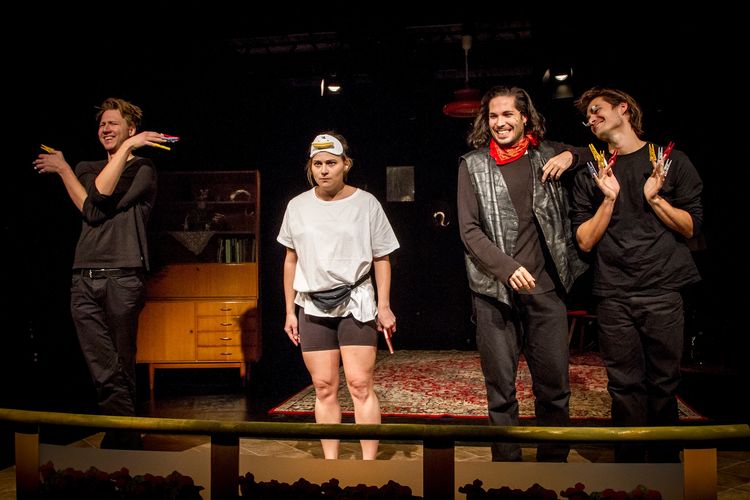
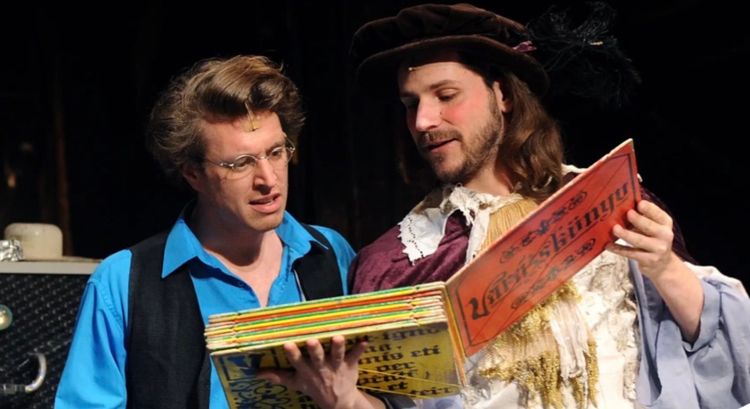
On this special evening, four wonderful actors will improvise about the secrets kept by the Kiscelli Museum, led by Péter Novák, the vivacious referee.
What does the Kiscelli Museum have to do with the murder of the former luxury courtesan, Elza Mágnás? And who was the lady’s lover, the billionaire furniture manufacturer Miksa Schmidt? What miraculous power has been hidden within the walls of the building for 300 years? What is the connection between vegetarian cuisine and Kiscelli?
We are waiting for you with such and similar cultural and historical secrets on this unforgettable but instructive historical evening. In fact, before the performance, you can see the crypt, which is usually closed to the public, and everyone is welcome to a glass of welcome drink.
Schedule
Authors: Judit Stahl and Hanna Stahl-Bohus
Host: Péter Novák
Actors: Adél Jordán, Csaba Debreczeny, Máté Járai, Tamás Szabó Kimmel
Set design: Eszter Kálmán
Music details: Budapest Bar
Duration: 2x50 minutes
The path to the performance leads through the museum's Altemple, which is closed to visitors. Tour guide: Roland Perényi, historian
During the break, we invite our guests for a glass of drink.
Reservations are on a first-come, first-served basis.
Program ticket:
Advance price: 8,900 HUF (for the first 100 people to book)
Regular price: 9,900 HUF
Can be purchased in person at the museum's ticket office or online
Kiscelli Museum
The Kiscelli Museum and its 15 hectares of parkland are located in the 3rd district of Budapest, between Óbuda and Remetehegy. The 18th century Baroque church and Trinitarian monastery, built by the Zichy family, was used as a barracks by the army in the 19th century. In 1910 it became the property of furniture manufacturer Miksa Schmidt, who later had it converted into a castle, hence the name Schmidt Castle. It is now home to the Budapest History Museum's collection of Modern Urban History and the Budapest City Gallery, the fine arts collection.