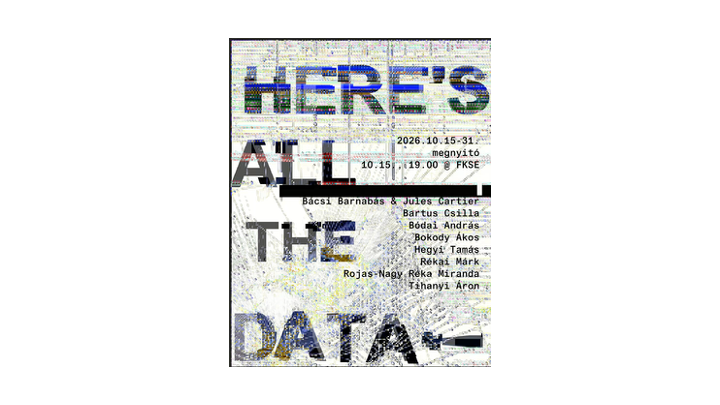
MODDING: Here’s All The Data!


Yet this gesture can mean much more than a merely cosmetic intervention. Rather than building new systems, modding allows us to divert existing ones from their intended course, disrupt them, or turn them against themselves. In this shift, what has hitherto remained hidden behind the interface can become visible. The practice can also be considered beyond the narrow context of video games — an approach taken by the exhibition MODDING: Here’s All The Data!, through both analogue and digital gestures.
The exhibition aims to draw attention to the possibility of understanding the structures we inherit not as finished products to be accepted as they are, but as systems that can be reshaped.
The developers of the 1993 game DOOM made it easy to modify, without having to reinstall the entire game or even possess programming knowledge. From that point on, modding became a mass phenomenon: thousands of fans began creating their own levels, characters, and entire scenarios for their favourite games. Components traditionally kept under strict control by publishers became accessible, encouraging individuals to intervene at a systemic level.
Looking back today, from an age scrambling to respond to systemic crises, the gestures that gained significance in the 1990s seem newly relevant. Rather than waiting for a complete rewrite from above, we can organise from the ground up, intervene in what already exists, leave our mark, and reclaim and exercise our power on our own scale.
“The world does not need new ideas. The challenge is simply to recognise what we already know to be true,” states Alexander R. Galloway. If we agree with him, then modding is not only an opportunity, but also a responsibility.
Schedule
- 17:00-20:00Kiállításmegnyitó: Rékai Márk performansza és a c💿d livecoding szettje
MODDING: Here's All The Data!
Modding originally refers to a practice in which players reach into the visual layer, ruleset or code of an existing video game in order to reshape it according to their own vision.
The gesture can carry far more than a cosmetic intervention, however. Rather than building new systems, modding lets us divert, stall and turn the existing one inside out, and in that displacement, everything that previously remained hidden behind the interface may become visible. The practice can also be considered outside the narrow context of video games, which is what the exhibition MODDING: Here's All The Data! sets out to do, through analogue and digital gestures alike.
The exhibition aims to draw attention to the fact that political power lies in collective action within the existing world: in understanding the structures we are given not as ready-made products to be accepted, but as systems that can be shaped.
The developers of DOOM, released in 1993, introduced a file format that made the game relatively easy for individuals to modify. Levels, textures and sounds were stored in separate .WAD files, which could be modified or extended without reinstalling the whole game, and even without programming knowledge. The exhibition's title alludes to these files, whose name derives from the question "Where's All the Data?"
From then on, modding became a mass phenomenon: for more than three decades now, thousands of fans have been building their own levels, characters and entire scenarios for their favourite games. Components traditionally kept under strict control by publishers and developers were made not merely accessible through these purpose-built files, but encouraged individuals to intervene at the level of the system, at times even stimulating the creation of unofficial modifications. Today, publishers, having recognised the revenue potential (among other things) of modding, increasingly restrict the possibilities for intervention, and in many cases even buy up mods and put them behind a paywall.
Looking back at the small yet significant gestures of the nineties from our present, an age gasping from systemic crises, it seems timely again to leave a mark by intervening in what exists, organising from below rather than waiting for a total rewrite from above, and to reclaim and assert our agency at our own scale.
"The world doesn't need new ideas. The challenge is simply to recognize what we already know to be true," says Alexander R. Galloway. If we agree with him, modding is not only a possibility but a responsibility.