Endre Tót: smile somewhere here

A Selection from Endre Tót’s Conceptual Paintings from the 90s
Schedule
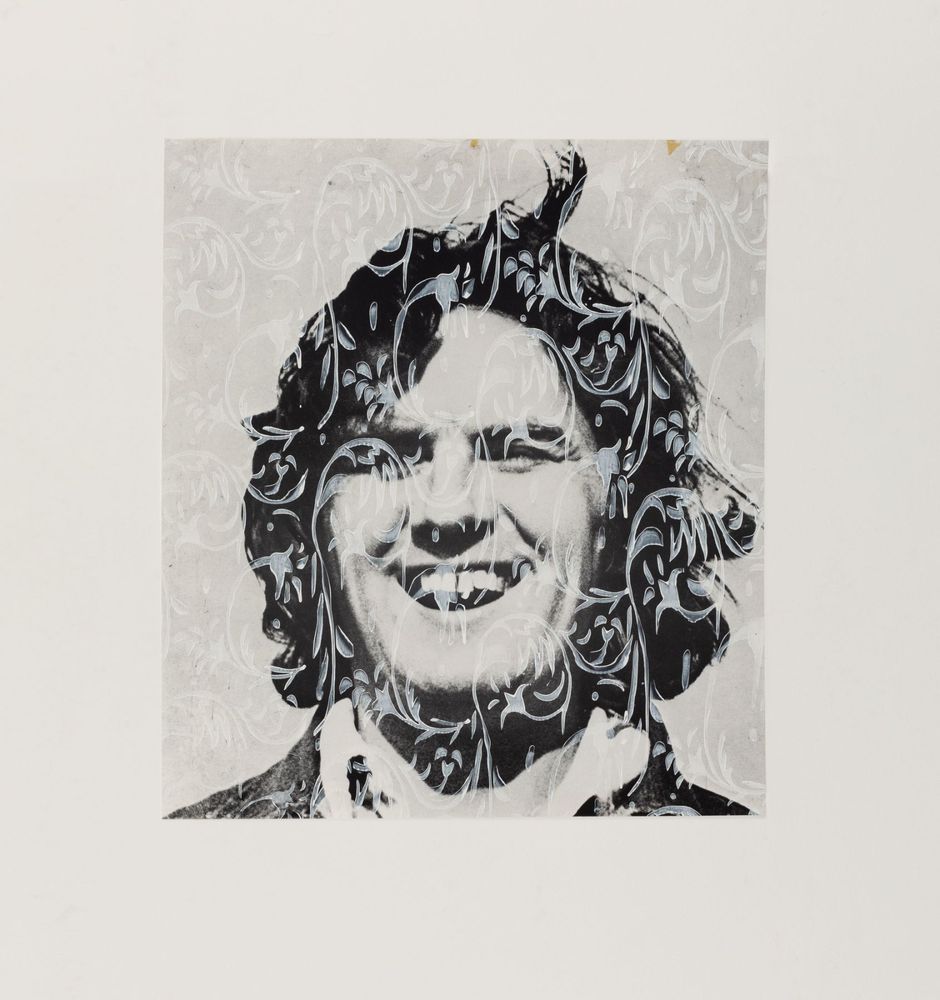
“Smile somewhere here” – this short inscription appears on Endre Tót’s 1999 painting, which is part of his exhibition at acb Plus. The piece serves as both an ironic self-portrait and a reference to the artist’s 1972 conceptual Mona Lisa paraphrase. This encapsulates the essence of the latest exhibition at acb Gallery, which features a selection of Tót’s conceptual paintings drawn from his mail art of the 70s and painted in the 90s.
Endre Tót began his career in the 60s, emerging from the influences of informel painting and pop art. In 1970, he abandoned painting and entered the international flow of conceptual and fluxus art movements through mail art. Until his emigration to the West in 1978, Tót was compelled to focus on ideas, happenings, and various public and institutional interventions.
The large-scale paintings on display can be interpreted as manifestations of his 70s conceptual works and as “visualizations” that create an internal dialogue between different periods of his multilayered oeuvre. Hence, several works are marked with two dates (e.g., 1975/1993), indicating when the original mail art piece was created and when its painted version was made. Following the revelation of his previously concealed 80s paintings (featured in acb Gallery’s 2022 exhibition and catalog titled Warum male ich?), the artist officially and openly returned to the medium of painting in the late 80s. His conceptual painting series (Absent Paintings, Blackout Paintings, Catalogued Paintings, Paintings with Details) were first exhibited in the 90s at Galerie Ucher in Cologne (1991), followed by the Kunsthalle in Budapest (1995), the Ludwig Museum in both Cologne and Budapest (1999), and the Fridericianum in Kassel in the mid-2000s. This current selection does not aim for comprehensiveness but allows for the possibility of dialogue between the works grouped into different categories.
At the core of the exhibition at acb Gallery is Tót’s paraphrase of Andy Warhol’s Elvis, which faces his iconic self-portrait that has been reinterpreted numerous times. These two pieces, along with several others in the exhibition, are linked by decorative ornamentation applied with a paint roller, serving as the artist’s signature effort to deheroize painting. The other pieces in the selection similarly engage in ironic, multifaceted dialogues with significant figures and works in art history (Leonardo da Vinci, Piet Mondrian, Andy Warhol), the grand ideological narratives that disintegrated in the 90s, and other series within Tót’s oeuvre (Zero Works, Blackout Paintings).
The paintings on the walls are accompanied by display cases featuring 70s works and self-published books. These closed cabinets highlight a selection of 70s conceptual works that serve as precursors to the paintings, showing that the major themes Tót introduced with his radical shift in 1970 – rain, joy, zeros, nothingness – have permeated his oeuvre for decades. Alongside these works are his first artist’s book, Semmi sem semmi (Nothing is Nothing), published in only 50 copies, and the similarly self-published 1971 Meg nem festett vásznaim (My Unpainted Canvases), which encapsulate the essence of what can be seen in this exhibition. Also on display are his later publications released by international publishers and important institutional exhibition catalogs from previous showcases of these painting series.
The true aesthetic value of the works displayed in this exhibition lies not only in their painterly qualities but more importantly in their philosophical achievements (Ken Friedman). The themes of his paintings, such as the repetitive iterations of nothingness, typographic plays with zeros, portraits and meta-portraits, or iconic images of notable artists and historical figures, are all extraordinary imprints of his continually enriching, multilayered, and uniquely individual oeuvre.
acb Gallery
Founded in Budapest in 2003, acb Gallery has consistently grown in the past two decades establishing itself as one of the leading actors in the Hungarian and Eastern European art market. Initially, the gallery’s focus was on Hungarian and international emerging and mid-generation neo-conceptual artists, who became active after the political changes in the former Eastern Bloc in 1990. Since then, the gallery has expanded its focus, and now represents numerous Hungarian neo-avant-garde artists who have left their mark on art history since the 1960s and 1970s, as well as members of the youngest generations beside the already established ones.
Since the autumn of 2022, acb runs three exhibition spaces: the main gallery space, acb Attachment, which serves as a project space, and acb Plus, dedicated to large-scale solo and group presentations.
acb’s research and publishing department, acb ResearchLab was founded in 2015. This platform within the gallery aims to fill the gaps in the reception and publication of Hungarian neo-avant-garde and post-avant-garde oeuvres by studying bodies of works and art phenomena previously treated as peripheral.
The gallery holds significant importance within the global art market, actively promoting its artists nationally as well as internationally and engaging in art fairs, such as the Art Basel in Basel and Art Basel Miami Beach, the Frieze Masters London or the ARCO Madrid.