Fennesz, Raphael Roginski

Two anti-guitar heroes, two unique instruments, two solos. Austrian electronic music pioneer Fennesz returns with his new album Mosaic, which pushes the boundaries of guitar-based ambient and glitch symphony. He is joined by Polish artist Raphael Roginski, who blends Jewish and Eastern European musical traditions with contemporary improvisations: folk motifs and experimental textures in an intimate séance, during which the summoned sounds and their historical resonance are transformed into an acoustic memory space.
Schedule
FENNESZ
Christian Fennesz is a prominent figure in contemporary electronic music who treats the guitar and laptop as symbiotic instruments. He has collaborated with artists such as Ryuichi Sakamoto, David Sylvian, Sparklehorse, and Mike Patton, and his musical world has been constantly shaped by these various collaborations, yet he has always remained true to himself. On his new album, Mosaic, he worked in seclusion, following a precise routine: composing in the morning light, experimenting in the afternoon, and editing in the evening. The end result is a mosaic-like work featuring both bright and dark soundscapes, in which delicate melodies hide beneath layers of glitch, and the rhythm sometimes beats in 7/4 time, sometimes following some unknown meter. Fennesz's musical world is at once structured and free-flowing, technically sophisticated and emotionally deep, like a soundscape.
Musically, the album ventures boldly from symphonic electronica to West African pop influences, while retaining Fennesz's sensitive, layered textures. Mosaic carries on the timeless imprints of Endless Summer and Venice, but now drifts toward a new horizon: where the sea is darker, the lights are more contrasting, and the soundscapes are even more evocative. A mature sonic self-portrait.
RAPHAEL ROGINSKI
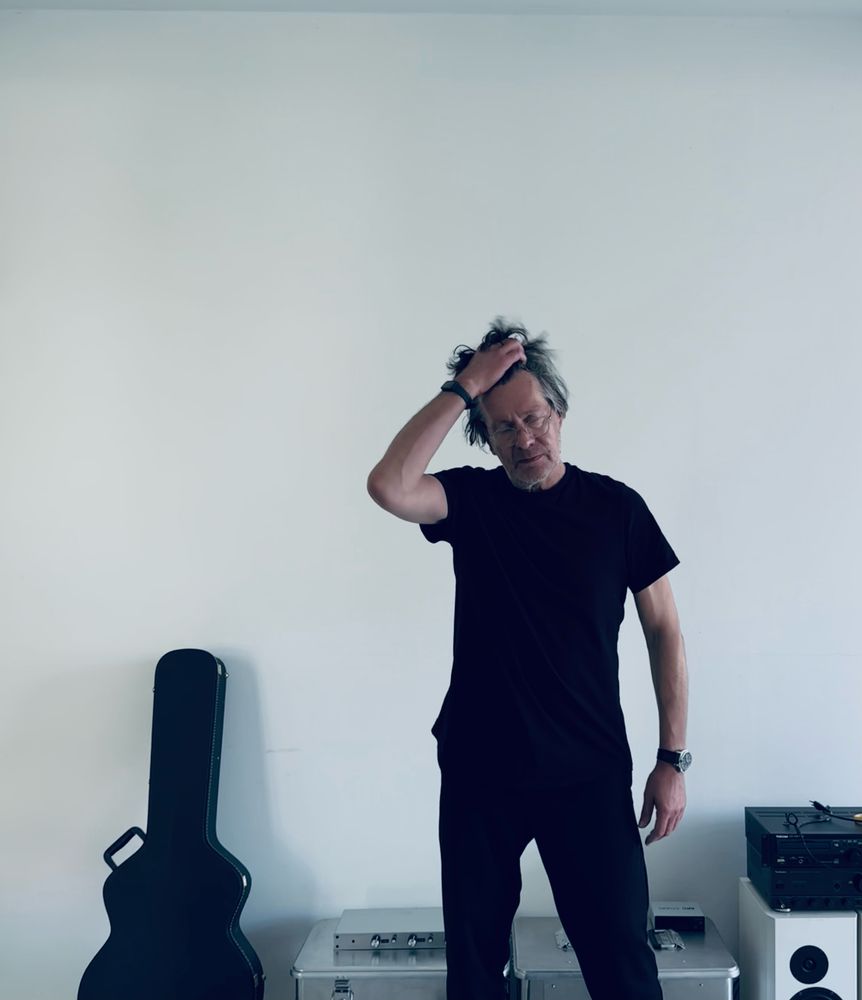
Raphael Roginski is an obsessive explorer of Eastern European musical memory. Blues guitar technique, jazz background, ethnomusicological deep dives – and yet something very contemporary, very personal. Roginski builds soundscapes from Jewish tradition, Kurpie folklore, or even the sounds of Senegal in the 1970s, which are at once archaic and radically contemporary. Whether he is playing Bach on a prepared guitar or evoking the spiritual world of niguns in a solo, his music always reminds us: the past is living sound material.
His latest works, Talán and Žaltys, interpret the musical roots of the region in a contemporary way. Roginski does not merely play music, he opens up an archive, evokes memories, and keeps alive everything that has almost been forgotten.
House of Music Hungary
A music education centre and concert venue in the heart of the City Park, behind the airy futuristic glass facade of Japanese architect Sou Fujimoto.