TAMÁS HAJDU: ALL QUIET ON THE EASTERN FRONT

The exhibition is free to visit between
February 19 - March 29, 2026
Tuesday to Sunday, from 12 a.m. to 7 p.m.
Closed on Mondays and public holidays.
Curator: Rita Somosi
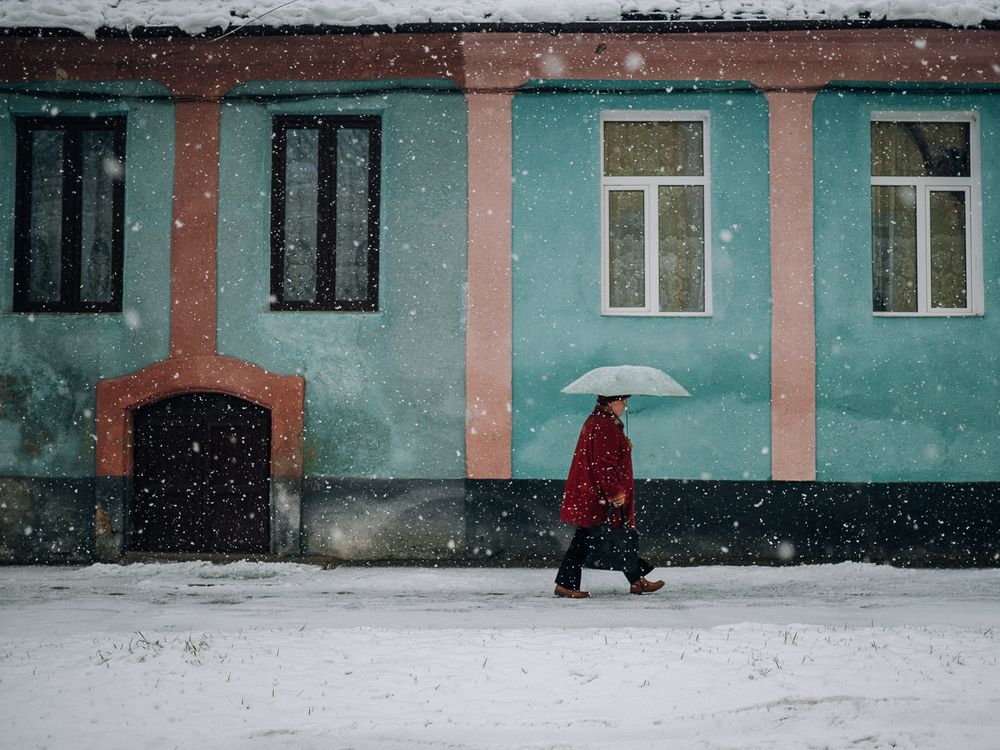
Tamás Hajdu’s photographs are powerful representations of contemporary Eastern European visual culture. His work merges the traditions of documentary photography with a sensitivity to the absurd, engaging in a dialog with the aesthetic and social legacies of the post-socialist region. He captures everyday situations that may appear banal at first glance, yet when placed in a photographic context, they reveal a grotesque and often ironic layer typical of the urban and rural spaces of former socialist countries.
Schedule
Tamás Hajdu’s photographs are powerful representations of contemporary Eastern European visual culture. His work merges the traditions of documentary photography with a sensitivity to the absurd, engaging in a dialog with the aesthetic and social legacies of the post-socialist region. He captures everyday situations that may appear banal at first glance, yet when placed in a photographic context, they reveal a grotesque and often ironic layer typical of the urban and rural spaces of former socialist countries.
The photographs are not merely visual diaries but also important sociological and aesthetic imprints as well. Despite their seemingly spontaneous compositions, they rest on clear structural principles and reflect a consciously constructed visual language. Hajdu’s visual world can be likened to the documentary approach of Neue Sachlichkeit, while also resonating with the Eastern European grotesque found in Czech New Wave films or Romanian neorealism. The ironic, at times surreal exploration of reality is a key motif in both of these movements, as it is in Hajdu’s work.
A central element in Hajdu’s photography is the visual character of post-socialist space, where functionality and aesthetic neglect blend with the nostalgic traces of the past. The resulting imagery often bears the traits of a ‘makeshift aesthetic,’ marked by recycled objects, temporary fixes, and visually dissonant elements coexisting within the same frame. Hajdu approaches this aesthetic not with the distance of a documentarian but with subtle empathy—his photographs not only record but also interpret the cultural patterns that shape their surroundings.
The objects and creatures—especially animals—that populate his photographs are not mere decorative or anecdotal details but meaning-bearing components. Animals sometimes merge seamlessly with their surroundings, at other times accentuate their surreal character; departing from classical animal symbolism, they become allegories of Eastern European reality. The cat crouched to strike from a yellow armchair in a courtyard, or the man hauling a space heater—such images make the absurd feel not strange but intimately familiar.
One of the most important elements of Hajdu’s visual language is humor—never degrading or crude, but rooted in irony, visual paradox, and the play of layered meanings. Through these, the viewer gains insight into the social and historical references underlying the images. Here, humor functions not to provoke laughter but to stimulate critical reflection.
Simultaneously, Hajdu's work closely aligns with contemporary photography currents that view everyday reality as a site of meaning-making. In this sense, his images strike a balance on the boundary between conceptual photography and classical street photography. While they are never staged and retain the energy of spontaneity, they are nonetheless the result of deliberate aesthetic choices. In his compositions, a precise sense of proportion, the considered use of space, and a refined approach to color all serve to elevate the everyday scene to the level of artistic representation.
The recurring “layers of time” in Hajdu’s photographs—such as retro furniture, worn walls, or overgrown, forgotten surfaces—are not merely nostalgic details but projections of a distinctly post-socialist sense of temporality. These motifs simultaneously evoke the past and reflect on the present, lending the images a historical dimension that reaches beyond the mere capture of a moment.
Ultimately, what makes Tamás Hajdu’s work truly compelling is the ambivalence that unfolds between the grotesque and the intimate, critique and empathy, past and present. His photographs embody the characteristic aesthetics of Eastern European visual culture while also posing universally resonant questions: What do we do with our heritage? How does our environment shape our identity? What makes a moment both ordinary and meaningful?
The exhibition at PaperLab Gallery presents a selection from the artist’s body of work that highlights not only his stylistic and thematic diversity but also the consistency of his artistic vision.
Tamás Hajdu
Born in 1976 in Șimleu Silvaniei, Romania.
He graduated in 2000 from the University of Agricultural Sciences and Veterinary Medicine in Cluj-Napoca, earning a degree in veterinary medicine. He currently works as a veterinarian in Baia Mare. A self-taught photographer, he has been consciously pursuing photography since 2005. He was a finalist at the Sony Photography Awards in 2013, the LensCulture Awards in 2015, and the Exibart Street Contest in 2018. In 2024, he received the Romanian Visual Awards prize for Best Street Photographer.
His works have been exhibited at Photoville in New York and at the Spotlight Romania exhibition in The Hague, and they have been published in numerous international magazines and newspapers, including Punctum, Practical Photography, Vice, Lenscratch, Feature Shoot, The Independent, La Repubblica, National Geographic, and The Guardian.
Notable solo exhibitions in recent years include: FotoIstanbul – invited by the Capa Center (2016); Sfântu Gheorghe (2017); Budapest (2018); PhotoIs:rael – Tel Aviv (2018); and TIFF – Cluj-Napoca (2025).
Hungarian House of Photography - Mai Manó House
Mai Manó House – The Hungarian House of Photographers – operates in a studio-house built at the end of 19th century, for the commission of Mai Manó (1855-1917), Imperial and Royal Court Photographer. This special, eight-story neo-renaissance monument is unique in world architecture: we have no knowledge of any other intact turn-of-the-century studiohouse. In addition, it serves its original goal, the case of photography again.
The aim of Mai Manó House is to advance the development of Hungarian photography and raise photography’s national prestige as a distinct form of art.
The institution plays a marked role in the cultural life of Budapest and Hungary, while the organization of exhibitions and programs abroad is getting more and more emphasis within its activities. The reputation of justly world-famous Hungarian photographers of the 20th century offers a great opportunity to regain our old status in the world of photography by the introduction of the generations following those great masters